
Migration Safari : Complete Guide
The Great Migration is one of the most extraordinary wildlife events in the world, attracting thousands of travelers each year who want to experience the beauty of African wildlife in its natural environment. This incredible movement involves millions of wildebeests, zebras, and gazelles traveling across the vast Serengeti ecosystem in search of fresh grass and water. The journey is continuous and follows seasonal rainfall patterns, creating one of the most dramatic natural spectacles on Earth.
Inside Serengeti National Park, huge herds move across open plains, river systems, and woodlands while facing predators such as lions, hyenas, crocodiles, and cheetahs along the way. This movement, known as the Wildebeest migration, is filled with powerful survival moments including river crossings, predator encounters, and the birth of thousands of calves during calving season.
Timing is one of the most important parts of planning a Great Migration safari because the location of the herds changes throughout the year. Different months offer different safari experiences, from dramatic Mara River crossings in the north to peaceful calving season scenes in the southern Serengeti. Choosing the right season helps travelers experience the type of wildlife activity they are most interested in during their Tanzania safari adventure.
The migration also connects Tanzania and Kenya through one shared ecosystem. As the herds move northward, they cross into Maasai Mara National Reserve before eventually returning to the Serengeti plains again. This natural cycle creates one of the greatest African safari experiences, offering unforgettable opportunities to witness wildlife movement on a massive scale.
For travelers seeking adventure, photography, and close encounters with nature, the Serengeti migration remains one of the most remarkable safari experiences in Africa. Understanding when to visit can make a huge difference in what you see, helping you experience the best moments of this world-famous wildlife journey.
What Is the Great Migration?
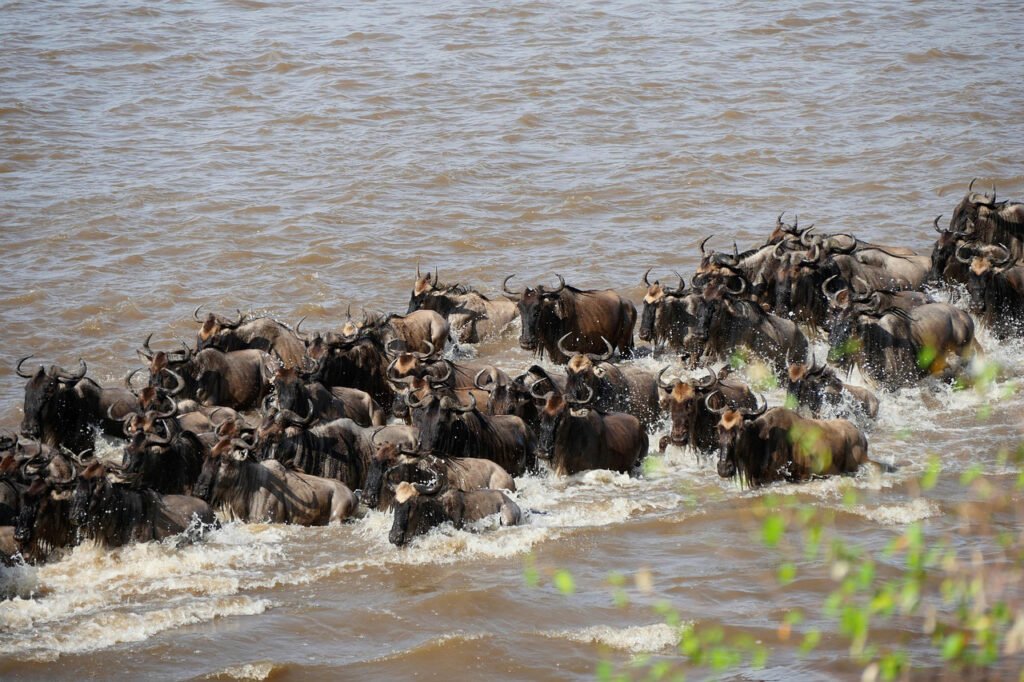
The Great Migration is the largest land animal migration in the world and one of the most spectacular wildlife events in African wildlife. Every year, millions of wildebeests, zebras, and gazelles move across the Serengeti ecosystem in search of fresh grass and water. This continuous journey takes place between northern Tanzania and southern Kenya, creating an incredible natural cycle of survival, movement, and predator-prey interaction.
Inside Serengeti National Park, the migration shapes the entire ecosystem as animals travel across open plains, rivers, and woodlands throughout the year. The movement is not random; it follows rainfall patterns and the growth of fresh grazing areas, making the migration one of the most important ecological events in Africa.
Why Do Wildebeests Migrate?
Wildebeests migrate mainly to find fresh grass and water for survival. As seasons change and rainfall moves across the Serengeti ecosystem, grazing conditions also change. Wildebeests instinctively follow the rains because fresh grass provides the nutrients they need to survive and reproduce.
The migration is a natural survival strategy that has existed for thousands of years. When dry conditions reduce food availability in one area, the herds move to regions where rain has recently fallen and new grass has grown. Zebras and gazelles often travel alongside wildebeests because they benefit from the same grazing conditions and added protection from predators in large groups.
How Many Animals Take Part in the Migration?
The Great Migration involves more than 1.5 million wildebeests along with hundreds of thousands of zebras and gazelles. Together, these animals form massive herds that stretch across the plains and create one of the most breathtaking wildlife scenes in the world.
The migration also attracts many predators including lions, hyenas, leopards, cheetahs, and crocodiles that depend on the herds for food. This creates constant wildlife interaction throughout the journey, making the ecosystem extremely active and dynamic during migration periods.
Why Is the Great Migration One of the Greatest Wildlife Events?
The Great Migration is considered one of the greatest wildlife events because it represents nature on an enormous scale. Few places in the world still allow millions of animals to move freely across large natural landscapes without barriers. The migration demonstrates the powerful relationship between animals, climate, vegetation, and survival in the wild.
One of the most dramatic moments of the migration happens during river crossings, when large herds attempt to cross dangerous rivers filled with strong currents and crocodiles. These crossings create intense survival scenes that attract wildlife lovers and photographers from around the world.
The migration is also important because it supports the entire Serengeti ecosystem. Predators rely on migrating animals for food, while the movement of herds helps maintain grassland balance and nutrient distribution across the landscape. This makes the Great Migration not only a breathtaking safari experience but also one of the most important natural processes in African wildlife.
Where Does the Great Migration Take Place?
The Great Migration takes place across the vast Serengeti-Mara ecosystem in East Africa, one of the largest and most important wildlife regions in the world. This incredible migration route stretches between northern Tanzania and southern Kenya, allowing millions of wildebeests, zebras, and gazelles to move freely in search of fresh grazing land and water. The journey covers open plains, river systems, woodlands, and rolling savannahs, creating one of the most dramatic wildlife spectacles on Earth.
Inside Serengeti National Park, the migration forms the heart of the ecosystem and supports many predators and other wildlife species throughout the year. The movement is continuous and changes with the seasons, making different parts of the ecosystem important at different times of the year.
Serengeti Ecosystem in Tanzania
The Serengeti ecosystem in Tanzania is the main starting point and largest section of the Great Migration. This vast landscape provides the grasslands and water sources needed to support millions of animals during different stages of the migration cycle. The southern Serengeti is especially important during calving season, when thousands of wildebeest calves are born within a short period of time.
As seasons change, the herds move through central and western Serengeti regions where they continue feeding and searching for fresh grass. Rivers, open plains, and woodland areas all play an important role in supporting the migration and creating ideal conditions for wildlife survival.
Movement Toward Kenya’s Maasai Mara
As the dry season becomes stronger in Tanzania, the migrating herds gradually move northward toward Kenya’s Maasai Mara ecosystem. This movement is driven by the search for greener pastures and reliable water sources.
Inside Maasai Mara National Reserve, the migration reaches one of its most famous stages as animals cross dangerous rivers filled with crocodiles and strong currents. These river crossings are among the most dramatic wildlife scenes in Africa and attract safari travelers and photographers from around the world.
The Maasai Mara provides rich grazing land that supports the herds for several months before they eventually begin their journey back toward the Serengeti again.
Migration Routes Across East Africa
The migration routes across East Africa follow a natural circular pattern that depends on rainfall and grass growth. Animals move through different areas of the Serengeti and Maasai Mara ecosystem throughout the year, constantly adapting to environmental conditions.
This movement is not controlled by borders or human activity but by nature itself. The migration route has existed for thousands of years and remains one of the last great wildlife movements on Earth. Along the route, predators such as lions, hyenas, leopards, and crocodiles closely follow the herds, creating constant survival interactions within the ecosystem.
Because the migration covers such a large area across Tanzania and Kenya, travelers can experience different stages of the journey depending on the season and safari location. This makes the Great Migration one of the most dynamic and unforgettable African safari experiences in the world.
Why Timing Matters for a Great Migration Safari
Timing is one of the most important factors when planning a Great Migration safari because the migration changes location throughout the year. The movement of wildebeests, zebras, and gazelles depends on rainfall, grass growth, and water availability across the Serengeti ecosystem. This means that different months offer completely different safari experiences, from peaceful calving seasons to dramatic river crossings filled with survival challenges.
Inside Serengeti National Park, the migration never stays in one place permanently. Travelers who understand the timing of the migration can choose the best season based on the wildlife experiences they want to see during their Tanzania safari adventure.
Different Wildlife Experiences Throughout the Year
One reason timing matters is because wildlife behavior changes throughout the year. During some months, visitors can witness thousands of newborn wildebeest calves in the southern Serengeti, while in other months they can experience large herds crossing dangerous rivers in the north.
Each stage of the migration creates different safari highlights. Early in the year, the calving season brings large numbers of predators because newborn animals are vulnerable. In later months, river crossings become the main attraction as herds attempt to cross strong rivers filled with crocodiles. Because of these seasonal changes, every period offers a unique African safari experience.
Weather and Grass Conditions
Weather plays a major role in controlling the movement of the migration. Wildebeests and other grazing animals follow rainfall patterns because rain creates fresh grass needed for survival. When one area becomes dry and food is limited, the herds move toward greener regions with better grazing conditions.
During the rainy season, the landscape becomes lush and green, creating beautiful scenery and abundant food for herbivores. During the dry season, grass becomes shorter and water sources become limited, causing animals to gather near rivers and waterholes. These environmental changes strongly influence where wildlife can be found at different times of the year.
Predator Activity During Migration
Predator activity also changes depending on the migration season. Large predators such as lions, hyenas, cheetahs, leopards, and crocodiles closely follow the herds because the migration provides a constant source of prey.
During calving season, predators become highly active because young calves are easier to hunt. River crossing periods also create intense predator-prey interactions as crocodiles wait near crossing points and predators follow exhausted animals after dangerous crossings. Travelers who want to witness dramatic wildlife action often plan their safari during these active predator periods.
River Crossing Timing
River crossings are among the most famous moments of the Great Migration, and timing is extremely important for witnessing them. As the herds move northward toward Kenya, they must cross dangerous rivers such as the Mara River, where strong currents and crocodiles create life-or-death situations.
These crossings do not happen every day and are difficult to predict because animals may gather near riverbanks for hours or even days before deciding to cross. Travelers who visit during the correct migration period have a much higher chance of witnessing these dramatic moments.
For many safari visitors, seeing thousands of wildebeests crossing a river together is one of the most unforgettable wildlife experiences in Africa. This is why choosing the right safari timing is essential for experiencing the best moments of the Great Migration.
Great Migration Safari by Month
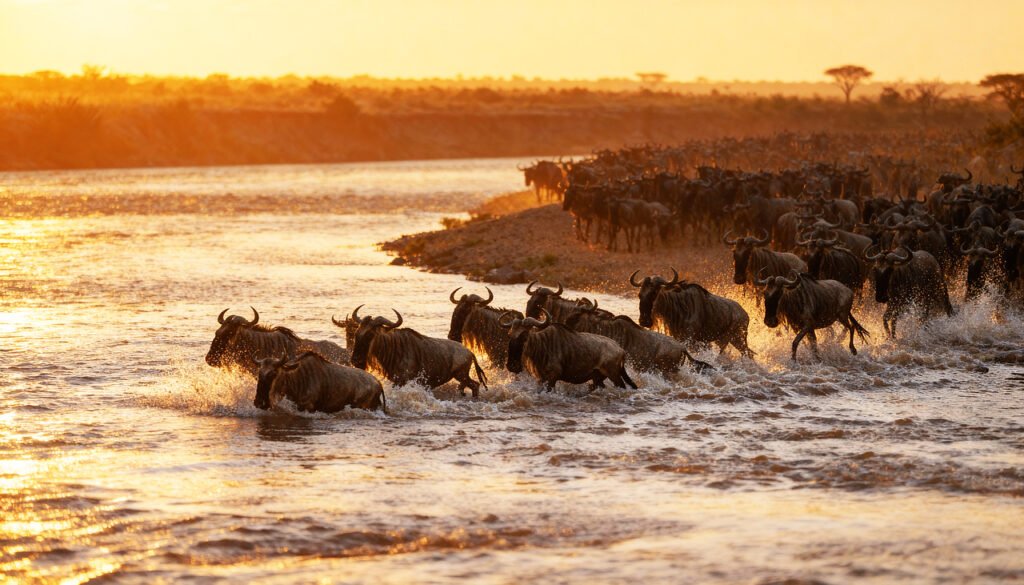
The Great Migration changes throughout the year as millions of wildebeests, zebras, and gazelles move across the Serengeti ecosystem searching for fresh grass and water. Every season offers a different safari experience, from newborn calves in the southern plains to dramatic river crossings in the north. Understanding the migration by month helps travelers choose the best time for their Tanzania safari depending on the type of wildlife experience they want to see.
Inside Serengeti National Park, the migration follows a natural cycle shaped by rainfall, grazing conditions, and predator activity. Each stage of the journey creates unique opportunities for wildlife viewing and photography.
January to March – Calving Season in Southern Serengeti
From January to March, the migration is mainly found in the southern Serengeti and Ndutu region, where the plains provide rich grass for grazing. This period is famous for calving season, when hundreds of thousands of wildebeest calves are born within a short time.
The arrival of newborn animals attracts many predators such as lions, hyenas, and cheetahs, creating intense wildlife activity across the plains. Visitors during this season can witness dramatic predator-prey interactions while also enjoying beautiful green landscapes after seasonal rains. This period is one of the best times for photography because of the combination of wildlife action and scenic surroundings.
April to May – Green Season and Herd Movement
During April and May, heavy rains transform the Serengeti into a lush and vibrant ecosystem filled with fresh grass and water sources. The migrating herds begin moving slowly toward central and western Serengeti regions as they continue searching for grazing land.
This season is often quieter in terms of tourism, making it ideal for travelers who prefer peaceful safari experiences with fewer crowds. The green season also creates excellent conditions for birdwatching and landscape photography. Although rain can sometimes affect road conditions, the scenery becomes extremely beautiful and wildlife remains active throughout the ecosystem.
June to July – Grumeti River Crossings
Between June and July, the migration reaches the western Serengeti where the Grumeti River becomes one of the major obstacles along the route. Large herds gather near the riverbanks before attempting dangerous crossings.
During this stage, crocodiles wait in the water while predators follow the herds nearby. The Grumeti crossings are dramatic and filled with survival challenges, making this period exciting for safari travelers who want to witness intense wildlife action.
This is also a time when the dry season begins to strengthen, causing wildlife to gather more closely around remaining water sources and improving overall game viewing opportunities.
August to October – Mara River Crossings
From August to October, many herds move into the northern Serengeti and toward Kenya’s Maasai Mara ecosystem. This period is considered one of the most famous stages of the Great Migration because of the Mara River crossings.
Thousands of wildebeests and zebras attempt to cross strong river currents while facing crocodile attacks and steep riverbanks. These crossings are unpredictable and can happen suddenly, creating some of the most dramatic wildlife scenes in African safari experiences.
Visitors traveling during this period often focus on the northern Serengeti because it provides the best chance to witness these iconic migration moments.
You can also mention:
- Maasai Mara National Reserve
November to December – Return to Southern Serengeti
As short rains begin returning to the Serengeti ecosystem, the migration gradually starts moving south again toward the central and southern plains. Fresh grass begins growing in these areas, attracting herds back to their calving grounds.
This return journey marks the continuation of the migration cycle and prepares the herds for another calving season in the coming months. During this period, wildlife spreads across different regions of the Serengeti, creating excellent opportunities for game drives and scenic safari experiences.
The return movement also highlights the natural rhythm of the ecosystem, showing how the Great Migration is a continuous cycle driven by rainfall, survival, and the search for fresh grazing land.
Best Time to See the Calving Season
The best time to see the calving season is usually from January to March, when the Great Migration herds gather in the southern Serengeti and Ndutu plains. During this period, the landscape becomes one of the busiest wildlife areas in Africa as hundreds of thousands of wildebeests prepare to give birth. This season is considered one of the most exciting times for a Great Migration safari because it combines newborn wildlife, predator action, and beautiful green landscapes.
Inside Serengeti National Park, the calving season creates incredible wildlife activity that attracts safari travelers, photographers, and nature lovers from around the world. The combination of new life and constant survival challenges makes this one of the most dramatic periods in the Serengeti ecosystem.
Why Are Thousands of Wildebeest Births So Important?
During calving season, hundreds of thousands of wildebeest calves are born within just a few weeks across the southern Serengeti plains. This synchronized birth period is a survival strategy that helps protect the young because predators cannot catch all the newborn animals at once.
Many calves are able to stand and walk only minutes after birth, which is necessary for survival in an environment filled with predators. The plains become covered with young animals and large migrating herds, creating one of the most breathtaking wildlife scenes in the world.
This stage of the migration is very important because it supports the continuation of the wildebeest population and maintains the balance of the Serengeti ecosystem.
Why Is Predator Activity So High Around Newborn Calves?
The calving season attracts many predators because newborn calves are easier targets compared to healthy adult animals. Lions, hyenas, cheetahs, jackals, and leopards closely follow the herds during this time, creating intense predator-prey interactions across the plains.
Predators become highly active because the large number of calves increases hunting opportunities. Visitors on safari may witness dramatic wildlife scenes such as lions stalking herds, cheetahs chasing young animals, or hyenas competing for food.
This constant interaction between predators and prey makes the calving season one of the most exciting safari experiences for travelers interested in real African wildlife behavior and survival in nature.
Why Is Calving Season Popular for Photographers?
Calving season is extremely popular for photography because it combines beautiful scenery with extraordinary wildlife activity. The southern Serengeti is usually green and vibrant after seasonal rains, creating stunning natural backgrounds for wildlife images.
Photographers have opportunities to capture newborn animals, dramatic predator action, emotional wildlife moments, and massive migration herds moving across the plains. The soft lighting during early mornings and evenings also creates excellent conditions for professional safari photography.
Because of the combination of action, emotion, and scenic beauty, many wildlife photographers consider calving season one of the best times to experience and photograph the Great Migration in Tanzania.
Best Time to See the Mara River Crossings
The best time to see the Mara River crossings is usually between August and October, when large herds of wildebeests and zebras move through the northern Serengeti while traveling toward Kenya’s Maasai Mara ecosystem. During this period, thousands of animals gather near the riverbanks before attempting dangerous crossings through strong currents and crocodile-filled waters. These dramatic moments are considered one of the greatest highlights of the Great Migration safari experience.
Inside the northern part of Serengeti National Park, the migration creates intense wildlife activity as predators closely follow the herds. Because the exact crossing times are unpredictable, visitors often spend several days in the region to increase their chances of witnessing these unforgettable events.
Why Are River Crossings So Dramatic?
River crossings are dramatic because they involve thousands of animals attempting to survive one of the most dangerous stages of the migration journey. Wildebeests and zebras gather at the riverbanks while searching for a safe place to cross, but fear, confusion, and strong survival instincts create chaotic scenes.
Sometimes the herds wait for hours or even days before suddenly rushing into the water together. Once the crossing begins, animals face powerful river currents, steep banks, panic within the herd, and predators waiting nearby. Dust, movement, and loud sounds from the herds create an intense atmosphere that makes river crossings one of the most exciting wildlife spectacles in Africa.
How Do Crocodile Encounters Affect Survival?
Crocodiles play a major role during Mara River crossings because they wait in the water for migrating animals to enter the river. Large Nile crocodiles use the crossing season as an important feeding opportunity and often attack weaker or slower animals during the chaos.
However, crocodiles are not the only danger. Some animals drown due to strong currents or become injured while climbing steep riverbanks. Predators such as lions and hyenas also follow the migration and hunt exhausted animals after they complete the crossing.
Despite these dangers, the migration continues every year because moving northward is necessary for survival. The crossings demonstrate the harsh reality of life in African wildlife ecosystems, where survival depends on strength, timing, and instinct.
What Are the Best Locations for River Crossings?
The best locations for witnessing river crossings are found in the Northern Serengeti near the famous Mara River. This region becomes highly active during migration season because the herds must cross the river while traveling between Tanzania and Kenya.
The Mara River is one of the most important natural obstacles in the migration route and is known worldwide for its dramatic wildlife scenes. Nearby safari areas in the northern Serengeti provide some of the best viewing opportunities for travelers hoping to experience river crossings during their Tanzania safari.
Dry Season vs Green Season Safari
Choosing between a dry season safari and a green season safari is one of the most important decisions when planning a Great Migration safari or Tanzania safari experience. Both seasons offer unique wildlife experiences, landscapes, and travel advantages depending on what visitors want to see during their African safari adventure. Inside Serengeti National Park, seasonal changes affect animal movement, vegetation, predator activity, and overall safari conditions throughout the year.
Understanding the differences between these two safari seasons helps travelers choose the best experience for photography, wildlife viewing, migration events, and comfort during their journey through the Serengeti ecosystem.
What Are the Advantages of the Dry Season?
The dry season is often considered the best time for wildlife viewing because animals become easier to find. During this period, grass is shorter and water sources become limited, forcing wildlife to gather around rivers, lakes, and waterholes. This creates excellent opportunities for seeing large numbers of animals in one area.
Predators such as lions, cheetahs, and hyenas are also easier to spot because prey animals concentrate near remaining water sources. The dry season is especially popular for witnessing dramatic wildlife action, including hunting behavior and river crossings during the Great Migration.
Another advantage of the dry season is that road conditions are usually better, making safari travel smoother and easier. Clear skies and lower chances of rain also improve conditions for photography and game drives across the Serengeti plains.
What Are the Benefits of the Green Season?
The green season takes place after seasonal rains when the Serengeti transforms into a lush and vibrant landscape filled with fresh grass and blooming vegetation. This period offers beautiful scenery and a quieter safari atmosphere with fewer tourists compared to peak dry season months.
One of the biggest benefits of the green season is the calving period in the southern Serengeti, when thousands of wildebeest calves are born. This creates incredible wildlife activity as predators follow the herds and hunt vulnerable newborn animals. The green season is also excellent for birdwatching because many migratory bird species arrive during this time.
Photographers often enjoy the green season because the landscapes become colorful and dramatic, creating stunning safari images with rich natural backgrounds and soft lighting conditions.
What Are the Main Wildlife Viewing Differences?
Wildlife viewing differs greatly between the dry and green seasons because animal behavior changes with environmental conditions. During the dry season, animals gather more closely around water sources, making them easier to locate and observe. Predator activity also becomes more visible because prey animals are concentrated in smaller areas.
In the green season, wildlife spreads across the ecosystem due to abundant food and water availability. Although animals may be more scattered, the environment becomes more beautiful and natural. Visitors can experience newborn animals, greener landscapes, and a calmer safari atmosphere.
The choice between these seasons depends on the type of safari experience travelers want. Visitors seeking dramatic predator action and easier wildlife sightings often prefer the dry season, while travelers looking for scenic beauty, fewer crowds, and calving season experiences may enjoy the green season more.
What Animals Can You See During the Great Migration?
The Great Migration is one of the richest wildlife events in Africa because it involves millions of animals moving across the Serengeti ecosystem throughout the year. During this incredible journey, travelers can see not only massive herds of grazing animals but also many predators following the migration in search of food. Inside Serengeti National Park, the migration creates constant wildlife movement and dramatic interactions that make every safari unique and unforgettable.
From wildebeests and zebras crossing rivers to lions hunting near the herds, the Great Migration offers some of the best wildlife viewing opportunities in the world.
Why Are Wildebeests the Main Animals of the Migration?
Wildebeests are the most important animals in the Great Migration because they form the largest part of the migrating herds. More than one million wildebeests travel across the Serengeti plains every year searching for fresh grass and water.
These animals move in enormous groups that can stretch across the landscape for many kilometers. Their migration shapes the entire ecosystem because predators depend on them for food, while their grazing helps maintain the balance of the grasslands.
Wildebeests are known for their strong survival instincts and ability to travel long distances despite facing dangerous rivers, predators, and harsh weather conditions during their journey.
Why Do Zebras Travel with Wildebeests?
Zebras often migrate together with wildebeests because the two animals benefit from each other during the journey. Zebras usually eat taller grass first, making it easier for wildebeests to feed on shorter fresh grass underneath.
Traveling in large mixed herds also provides better protection from predators because there are more eyes watching for danger. Zebras are easy to recognize because of their black-and-white stripes, and they are among the most photographed animals during a Tanzania safari.
Their social behavior and strong family bonds make them an important and beautiful part of the migration experience.
What Role Do Gazelles Play in the Migration?
Gazelles are smaller and faster grazing animals that often move alongside wildebeests and zebras during the migration. They are highly alert and depend on speed and quick movement to escape predators.
Gazelles usually feed on fresh shoots and plants that appear after rainfall, making them well adapted to the changing conditions of the Serengeti ecosystem. Although they are smaller than wildebeests and zebras, they play an important role in the migration because they contribute to the balance of herbivore populations in African wildlife.
Why Are Lions and Hyenas Common During the Migration?
Lions and hyenas closely follow the migration because the large herds provide a constant food source. During migration season, predators become highly active as they hunt weak, injured, or young animals within the herds.
Lions often hunt in groups called prides and use teamwork to attack larger prey such as wildebeests and zebras. Hyenas are also powerful predators and scavengers that compete with lions for food.
The interaction between predators and migrating animals creates dramatic wildlife scenes that attract safari travelers from around the world. These predator-prey encounters are one of the main reasons the Great Migration is considered one of the greatest African safari experiences.
How Do Crocodiles and Other Predators Affect the Migration?
Crocodiles become especially important during river crossing season when migrating herds attempt to cross dangerous rivers such as the Mara River. Large Nile crocodiles wait in the water and attack animals during crossings, creating intense survival moments.
Other predators such as cheetahs, leopards, and wild dogs also take advantage of the migration by hunting animals moving across the plains. Each predator uses different hunting techniques, adding even more excitement and diversity to the Serengeti wildlife experience.
The presence of so many predators during the migration highlights the natural balance of the ecosystem and shows how every species depends on the movement of the herds for survival.
Why the Great Migration Is Important for the Ecosystem
The Great Migration is not only one of the most spectacular wildlife events in the world, but it is also one of the most important natural processes in the Serengeti ecosystem. The movement of millions of wildebeests, zebras, and gazelles helps maintain ecological balance, supports predator populations, and contributes to the survival of many different species of African wildlife. Inside Serengeti National Park, the migration affects nearly every part of the environment, from grasslands and rivers to predators and birdlife.
Without the migration, the Serengeti would not function as the healthy and balanced ecosystem that exists today. The constant movement of animals across the landscape plays a major role in maintaining biodiversity and supporting life throughout the region.
Why Is Natural Wildlife Movement Important?
Natural wildlife movement is essential because it allows animals to follow seasonal rainfall, fresh grass, and water sources across the ecosystem. Wildebeests and other grazing animals move continuously in search of better survival conditions, preventing overgrazing in one single area.
As the herds travel, they spread nutrients across the plains through their waste and grazing activity, helping grasslands recover and grow again. This movement also helps maintain healthy soil and supports plant growth throughout the Serengeti ecosystem.
The migration represents one of the last large-scale natural wildlife movements left in the world, making it extremely important for conservation and ecological stability.
How Does the Migration Support Predator and Prey Balance?
The migration plays a major role in maintaining the balance between predators and prey in African wildlife. Large predators such as lions, hyenas, crocodiles, cheetahs, and leopards depend heavily on migrating herds as a food source.
Because millions of animals move across the ecosystem, predators can survive without completely reducing prey populations. At the same time, predators help control weak, sick, or injured animals, which supports healthier wildlife populations overall.
This natural relationship between predators and prey creates a balanced ecosystem where each species contributes to the survival of others. The migration helps sustain this balance throughout the year as animals continue moving across different regions of the Serengeti.
Why Is Biodiversity Important in the Serengeti Ecosystem?
Biodiversity means having many different types of plants, animals, birds, insects, and other living organisms within one ecosystem. The Great Migration supports biodiversity by helping maintain healthy grasslands and providing food opportunities for many species.
The migration benefits not only predators and herbivores but also scavengers, birds, insects, and smaller animals that depend on the ecosystem for survival. Rivers, grasslands, and woodland habitats all become connected through the movement of wildlife across the landscape.
Because of this biodiversity, the Serengeti remains one of the richest wildlife ecosystems in the world. The Great Migration helps keep this natural balance alive, making it one of the most important ecological events in African wildlife conservation.
Best Safari Experiences During the Great Migration
The Great Migration offers some of the most exciting and unforgettable safari experiences in Africa. Watching millions of wildebeests, zebras, and gazelles move across the Serengeti ecosystem creates incredible opportunities for wildlife viewing, photography, and adventure. Different safari activities allow travelers to experience the migration from unique perspectives, whether on the ground, in the air, or from luxury camps surrounded by nature.
Inside Serengeti National Park, every safari experience brings visitors closer to African wildlife and helps them witness the dramatic movement of animals across one of the world’s most famous ecosystems.
Why Are Game Drives the Most Popular Migration Experience?
Game drives are the most popular way to experience the Great Migration because they allow visitors to follow the herds closely and observe wildlife in real time. Safari vehicles travel across the Serengeti plains with experienced guides who understand animal movement patterns and know the best locations for wildlife sightings.
During game drives, travelers can witness wildebeests moving in massive herds, predators stalking prey, and dramatic river crossing scenes. The flexibility of game drives makes it possible to explore different areas of the Serengeti depending on where the migration is located during the season.
Game drives also provide excellent opportunities to see other African wildlife such as lions, elephants, cheetahs, giraffes, and hyenas during the safari journey.
What Makes Hot Air Balloon Safaris Special?
Hot air balloon safaris offer one of the most unique ways to experience the Great Migration because they provide breathtaking aerial views of the Serengeti ecosystem. These safaris usually take place at sunrise when the plains are calm and wildlife is highly active.
From above, travelers can see huge herds stretching across the landscape, rivers winding through the plains, and predators moving below. The aerial perspective helps visitors understand the true size and beauty of the migration in a way that cannot be experienced from the ground alone.
The peaceful movement of the balloon combined with the golden morning light creates a magical safari experience that many travelers consider unforgettable.
Why Are Luxury Migration Camps Popular?
Luxury migration camps are popular because they allow travelers to stay close to the migrating herds while enjoying comfort in the middle of the wilderness. Many camps move seasonally to follow the migration route, giving visitors better access to wildlife viewing areas throughout the year.
These camps often provide comfortable tents or lodges, excellent dining experiences, and stunning views of the Serengeti plains. Guests can hear wildlife sounds at night and wake up surrounded by nature, creating a true African safari atmosphere.
Luxury migration camps also provide quick access to game drives and river crossing locations, making them ideal for travelers who want an immersive migration experience with added comfort.
Why Are Photography Safaris Important During the Migration?
Photography safaris are especially important during the Great Migration because the event offers endless opportunities to capture dramatic wildlife moments and stunning landscapes. Professional guides help photographers position themselves for the best lighting, animal behavior, and action scenes.
Photographers can capture images of river crossings, predator hunts, newborn calves during calving season, and massive herds moving across open plains. The Serengeti’s natural lighting during sunrise and sunset also creates perfect conditions for wildlife photography.
Because every day of the migration brings different wildlife activity, photography safaris offer unique opportunities to document one of the greatest natural spectacles in the world.
Tips for Planning a Great Migration Safari
Planning a Great Migration safari requires good timing, proper preparation, and choosing the right safari experience. Because the migration moves across different parts of the Serengeti ecosystem throughout the year, travelers need to understand where the herds are located and what type of wildlife experience they want to enjoy. A well-planned safari increases the chances of seeing dramatic wildlife moments such as river crossings, predator action, and massive migrating herds.
Inside Serengeti National Park, safari conditions change with the seasons, making preparation very important for comfort, photography, and wildlife viewing success.
Why Is Booking a Safari at the Right Time Important?
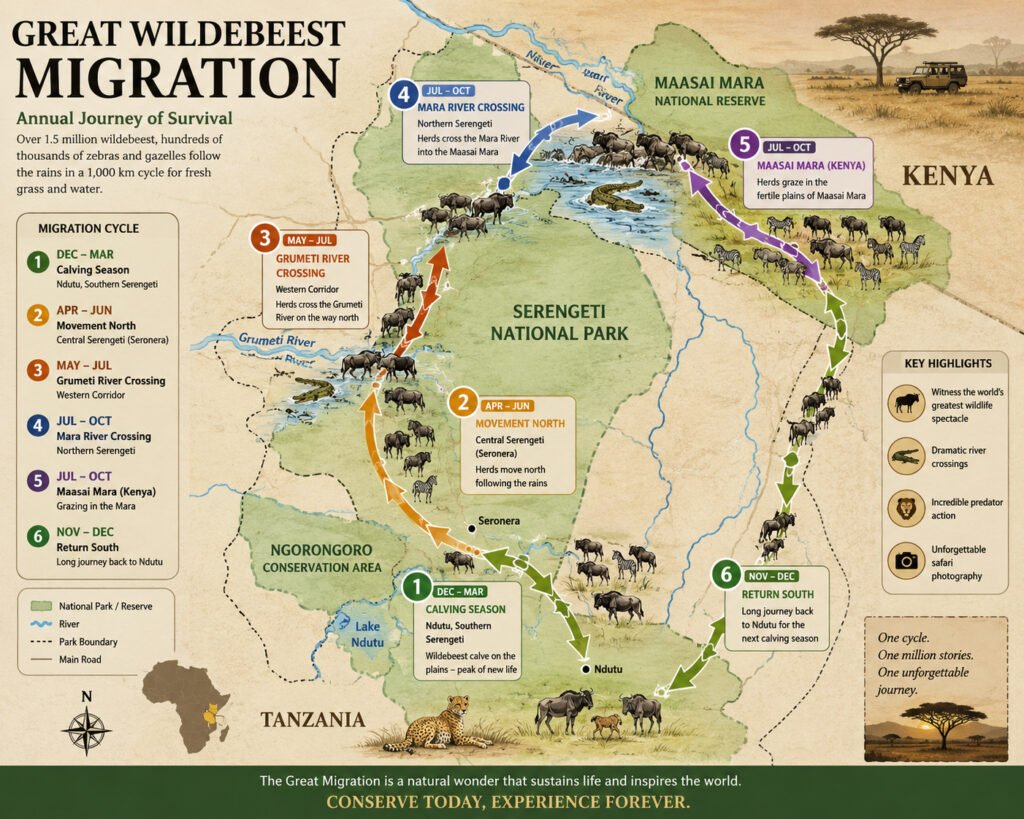
Booking a safari at the right time is important because different months offer different migration experiences. Travelers who want to see calving season should plan their safari between January and March in the southern Serengeti, while visitors hoping to witness Mara River crossings usually travel between August and October in the northern Serengeti.
The Great Migration is highly popular, especially during peak wildlife seasons, so many lodges and camps become fully booked months in advance. Early booking gives travelers better accommodation choices and access to the best safari locations near migration routes.
Understanding migration timing also helps visitors choose the safari experience that best matches their interests, whether they prefer predator action, scenic landscapes, photography, or quieter safari conditions.
How Do You Choose the Best Safari Location?
Choosing the best safari location depends on where the migration herds are during the time of travel. The Serengeti ecosystem is very large, and wildlife movement changes throughout the year based on rainfall and grazing conditions.
Southern Serengeti areas are ideal during calving season, while western Serengeti regions become important during Grumeti River crossings. Northern Serengeti is the best location for witnessing the famous Mara River crossings.
Travelers who understand seasonal wildlife movement can select safari camps and lodges closer to active migration areas, improving their chances of experiencing the most exciting moments of the Great Migration safari.
What Should You Pack for Different Safari Seasons?
Packing correctly is important because weather conditions in the Serengeti change throughout the year. During the dry season, lightweight clothing, hats, sunscreen, and sunglasses help protect travelers from heat and strong sunlight.
In the green season, visitors should also bring waterproof jackets, comfortable walking shoes, and protective bags for cameras and electronics because rain showers can occur. Neutral-colored clothing is recommended for safari activities because it blends better with the environment and avoids disturbing wildlife.
Travelers interested in photography should also carry binoculars, extra camera batteries, and memory cards to prepare for long wildlife viewing days in the Serengeti.
Why Are Professional Safari Guides So Important?
Professional safari guides are extremely important because they understand animal behavior, migration routes, weather patterns, and the best wildlife viewing locations. Their experience helps travelers find animals more easily and understand the ecosystem in greater detail.
Guides also improve safari safety by knowing how to approach wildlife responsibly without disturbing natural behavior. During migration season, experienced guides can predict herd movement and position safari vehicles in the best locations for photography and wildlife observation.
A knowledgeable safari guide transforms a normal safari into a much deeper and more educational African wildlife experience, helping travelers fully appreciate the beauty and complexity of the Great Migration.
Why Travelers Love Great Migration Safaris
Great Migration safaris are among the most unforgettable travel experiences in the world because they allow visitors to witness African wildlife on an extraordinary scale. The movement of millions of wildebeests, zebras, and gazelles across the Serengeti ecosystem creates nonstop wildlife activity and dramatic natural moments that cannot be experienced anywhere else. Inside Serengeti National Park, travelers experience the true beauty of nature through close wildlife encounters, powerful survival scenes, and breathtaking landscapes.
For many visitors, the Great Migration is more than just a safari—it is a chance to connect with the wild and witness one of the greatest natural events on Earth.
Why Do Travelers Enjoy Close Wildlife Encounters?
One of the main reasons travelers love Great Migration safaris is the opportunity to see wildlife up close in its natural habitat. Safari vehicles often move near large herds of wildebeests and zebras, allowing visitors to observe animal behavior, movement, and interactions from a safe distance.
Travelers can witness predators such as lions, cheetahs, and hyenas following the migration while elephants, giraffes, and many other animals move across the plains nearby. These close encounters create unforgettable memories and give visitors a deeper appreciation for African wildlife and the Serengeti ecosystem.
Why Are River Crossings So Exciting for Visitors?
River crossings are among the most dramatic moments of the Great Migration and are one of the biggest reasons travelers choose migration safaris. During these crossings, thousands of animals attempt to cross dangerous rivers while facing strong currents and crocodile attacks.
The uncertainty and intensity of the crossings create emotional and exciting wildlife scenes that are difficult to predict. Visitors often wait patiently near crossing points before suddenly witnessing massive herds rushing into the river together.
These dramatic survival moments make river crossings one of the most iconic African safari experiences and a major highlight for wildlife lovers from around the world.
Why Is Safari Photography So Special During the Migration?
The Great Migration offers incredible photography opportunities because of the large number of animals, dramatic wildlife action, and beautiful Serengeti landscapes. Photographers can capture images of endless migration herds, predators hunting prey, river crossings, and stunning African sunsets.
The open plains provide clear wildlife visibility, while sunrise and sunset lighting create perfect conditions for capturing professional-quality safari photographs. Every day brings different wildlife activity, giving photographers endless opportunities for unique and powerful images.
Because of this combination of movement, action, and scenery, the Great Migration is considered one of the best wildlife photography experiences in the world.
What Makes the Great Migration an Authentic African Safari Experience?
The Great Migration is considered an authentic African safari experience because it represents nature in its purest form. Animals move freely across vast landscapes without barriers, following ancient migration routes that have existed for thousands of years.
Visitors experience real wilderness where predators hunt naturally, herds travel long distances for survival, and wildlife behavior remains completely uncontrolled by humans. The sounds of the plains, the sight of massive herds stretching across the horizon, and the dramatic interactions between predators and prey create a true connection with nature.
This authenticity is what makes Great Migration safaris so meaningful and unforgettable for travelers seeking a genuine Tanzania safari adventure.
Conclusion
The Great Migration is one of the most extraordinary wildlife experiences on Earth and remains a dream safari adventure for travelers from around the world. The movement of millions of wildebeests, zebras, and gazelles across the Serengeti ecosystem creates an unforgettable display of survival, natural beauty, and African wildlife interaction. From dramatic river crossings and predator encounters to peaceful grazing scenes across endless plains, every stage of the migration offers something unique and breathtaking.
Choosing the right travel season is very important because the migration changes throughout the year. Some travelers prefer the excitement of Mara River crossings, while others enjoy the calving season in the southern Serengeti filled with newborn wildlife and predator action. Understanding the timing of the migration helps visitors experience the best moments of this world-famous safari event.
A Tanzania safari during the Great Migration is more than just seeing animals it is an opportunity to connect with nature and witness one of the last great natural movements on the planet. The Serengeti’s vast landscapes, rich biodiversity, and incredible wildlife activity make it one of the finest safari destinations in Africa.
For travelers seeking adventure, photography, and unforgettable wildlife experiences, the Great Migration offers memories that last a lifetime. Watching thousands of animals move across the plains under the African sky is a powerful reminder of the beauty and importance of the natural world. A journey into the Serengeti is not simply a safari; it is an experience of true African wilderness, freedom, and wonder.ffers memories that last a lifetime. Watching thousands of animals move across the plains under the African sky is a powerful reminder of the beauty and importance of the natural world. A journey into the Serengeti is not simply a safari; it is an experience of true African wilderness, freedom, and wonder.