 English
 Deutsch
 Italia
November 16, 2026
2027 Wildebeest Migration Forecast: Serengeti & Maasai Mara
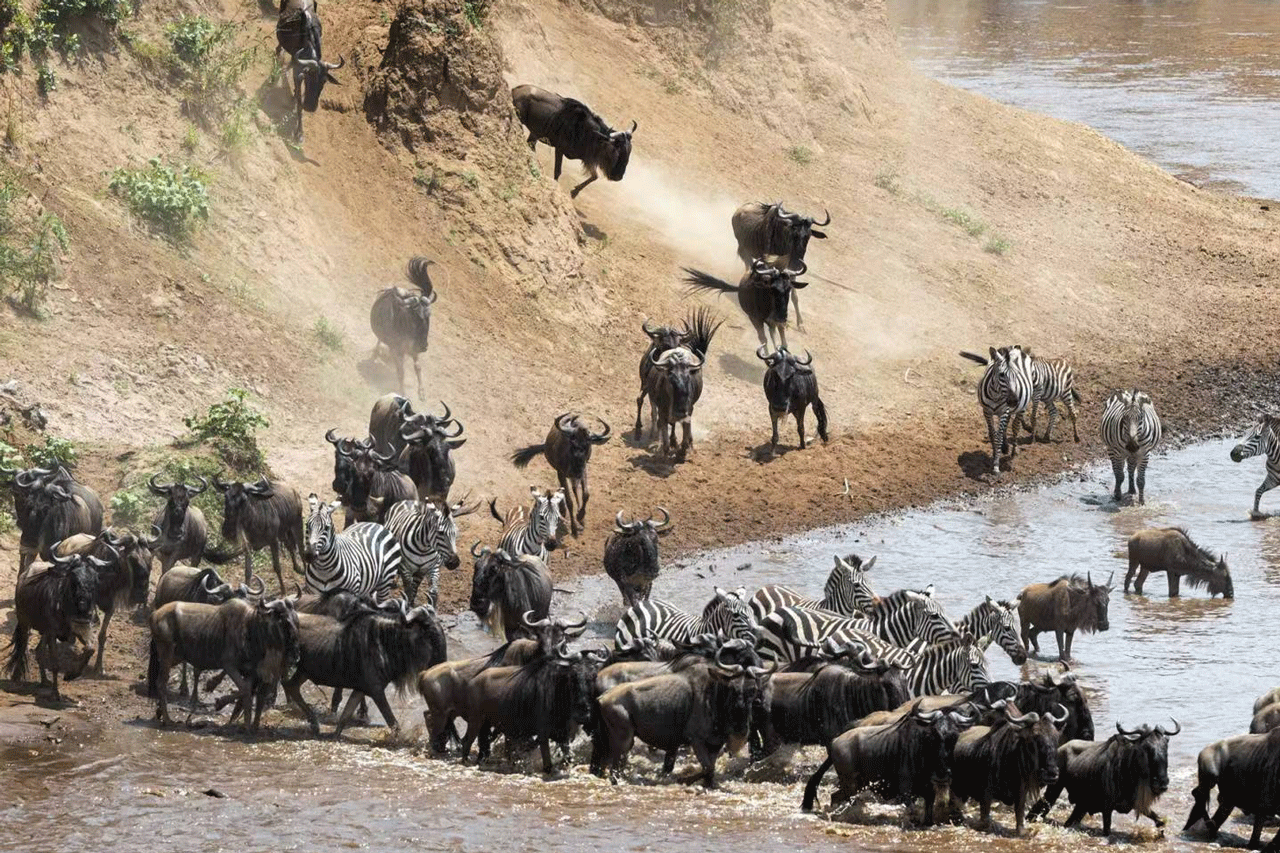
The 2027 wildebeest migration is expected to follow its annual movement through Tanzania’s Serengeti ecosystem and Kenya’s Maasai Mara, with herds gathering around Ndutu and the southern Serengeti for calving before moving through the central and western Serengeti towards the northern plains and Mara River. From July to October, visitors can look for migration activity in the northern Serengeti and Maasai Mara, although the timing and location of river crossings depend on rainfall, fresh grazing, and herd movements.
The Great Wildebeest Migration is a continuous wildlife journey involving wildebeest, zebras and gazelles as they search for fresh grass and water across the Serengeti–Mara ecosystem. Each season offers a different safari experience, from newborn calves and predator activity in southern Tanzania to large moving herds and possible river crossings in the north. This 2027 forecast explains where the herds are expected throughout the year, the best areas to visit each month, and how to choose a Tanzania safari based on your travel dates. Because the migration follows natural conditions rather than a fixed timetable, seasonal locations are forecasts, not guaranteed sightings.
Where Is the Wildebeest Migration in 2027?
The Great Wildebeest Migration is expected to move through the Serengeti in northern Tanzania and the Maasai Mara in southwestern Kenya throughout 2027. The herds usually gather on the southern Serengeti plains and around Ndutu from December to March, move through the central and western Serengeti between April and June, and head towards the northern Serengeti and Maasai Mara from July to October. They generally begin moving south again around November as seasonal rains return.
The migration does not begin or end in one particular place. It is a continuous seasonal movement driven mainly by rainfall, fresh grass and water availability. Although the general route follows a predictable annual pattern, the exact location of the herds can change from one year to another.
Expected Wildebeest Migration Locations in 2027
The following locations represent the expected seasonal pattern for 2027, not confirmed future sightings.
| Period | Expected location | Main wildlife experience |
| January to March | Ndutu and Southern Serengeti | Calving season and predator activity |
| April to May | Central and Western Serengeti | Herd movement and grazing |
| June to July | Western Corridor and Grumeti | Northern movement and possible Grumeti crossings |
| July to October | Northern Serengeti and Maasai Mara | Large herds and possible Mara River crossings |
| November to December | Central and Southern Serengeti | Return towards the southern plains |
This seasonal pattern is supported by the Convention on Migratory Species and Tanzania’s migration information. The actual timing may shift with rainfall and grazing conditions.
What Drives the Migration?
Rainfall is the main factor influencing the movement of wildebeest across the Serengeti–Mara ecosystem. When rain falls, fresh grass grows and attracts large herds. As grazing areas become dry, the animals move towards places with better food and water. This natural cycle takes them between southern Tanzania, the western and northern Serengeti, and Kenya’s Maasai Mara.
Are These Confirmed Wildebeest Sightings or a 2027 Forecast?
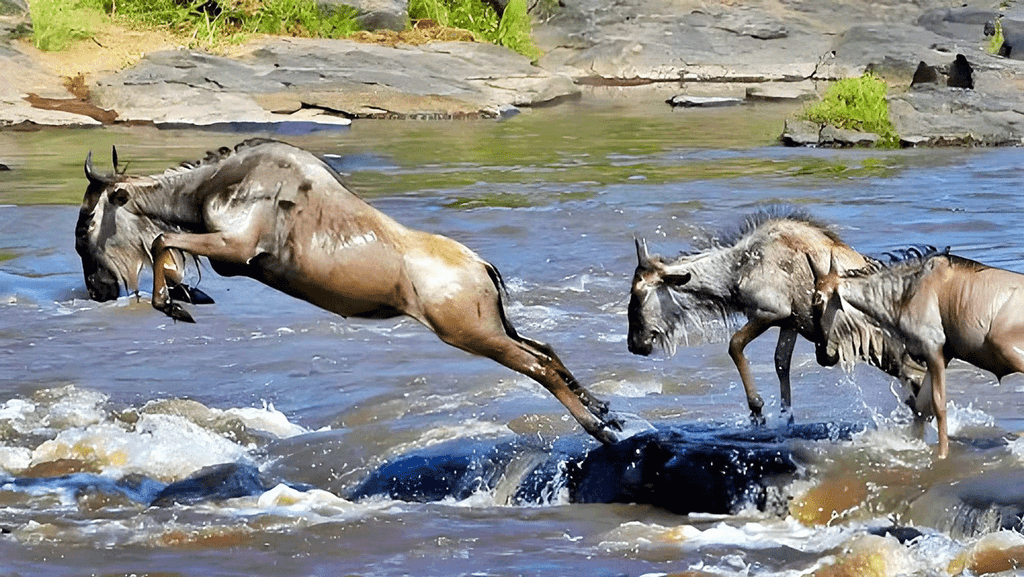
The 2027 migration locations in this guide are seasonal predictions based on established migration patterns, not confirmed sightings. Since the 2027 migration year has not yet begun, we cannot report verified 2027 herd locations.
For travellers planning a safari, it is important to distinguish between the expected seasonal route and the actual position of the herds. Recent sightings should come from dated reports by safari guides, camps, and reliable wildlife monitoring sources. These observations should be updated as the season progresses.
For the latest migration information, visitors can consult the Great Migration Map and Herd Location Guide and compare it with recent reports before choosing their safari destination.
Planning your 2027 migration safari: If you want to see newborn wildebeest, consider Ndutu and the southern Serengeti during the calving season. If your priority is witnessing possible Mara River crossings, consider the northern Serengeti between July and October. Neither experience comes with guaranteed dates or sightings.
2027 Wildebeest Migration Forecast Month by Month
The Great Wildebeest Migration changes location throughout the year as wildebeest, zebras and other grazing animals search for fresh grass and water across the Serengeti–Mara ecosystem. Each month brings different wildlife activity, from the birth of thousands of wildebeest calves in southern Tanzania to large herds moving through the Western Corridor and possible river crossings in the north.
The following 2027 migration calendar explains the expected herd locations, seasonal wildlife activity, and areas visitors should consider when planning a Tanzania safari. These locations follow the usual migration cycle rather than confirmed 2027 sightings. Rainfall patterns can change the timing and direction of herd movements.
January 2027 to Wildebeest in Southern Serengeti and Ndutu
January is an important month for the Great Wildebeest Migration in southern Tanzania. Large herds usually gather across the short-grass plains of Ndutu and the southern Serengeti, where seasonal rainfall encourages fresh grass growth. Pregnant wildebeest prepare to give birth, and the first newborn calves begin appearing as the calving season develops.
Visitors travelling during January can experience large grazing herds, green landscapes and increasing predator activity. Lions, cheetahs and hyenas follow the migrating animals, creating excellent opportunities for wildlife photography and predator sightings. Ndutu and the surrounding southern plains are the main areas to consider for a migration safari during this month.
February 2027 to Calving Season in Ndutu
February is generally the peak of the wildebeest calving season in the Ndutu region and southern Serengeti. Large numbers of female wildebeest give birth within a relatively short period, providing fresh grazing grounds and suitable conditions for newborn calves. The southern plains become particularly active as young wildebeest begin standing and moving alongside their mothers shortly after birth.
The concentration of newborn animals also attracts predators. Lions, cheetahs, leopards and hyenas take advantage of the seasonal abundance of young prey, making February an excellent month for observing predator behaviour. Travellers interested in seeing wildebeest births, young calves and hunting activity should consider spending several nights around Ndutu and the southern Serengeti.
March 2027 to Calving Continues, and Herds Begin Moving
During March, wildebeest calving activity can continue across parts of the southern Serengeti, although the main birthing period gradually decreases after February. Young calves become stronger, and growing herds begin spreading across the southern plains as grazing conditions and rainfall change.
Some groups may start moving towards the central Serengeti, while others remain around Ndutu and nearby grasslands. This movement does not happen simultaneously because different herds respond to local rainfall and available grazing. Visitors travelling in March can still enjoy opportunities to see newborn calves, large grazing groups and predators across the southern Serengeti.
April 2027 to Southern Serengeti and Central Serengeti
April marks a period of changing migration patterns as the herds gradually move away from the southern plains towards the central and western parts of the Serengeti. Seasonal rainfall supports fresh grass growth across different areas, allowing wildebeest to spread out while searching for suitable grazing.
The central Serengeti, including the Seronera region and surrounding plains, becomes an important area to consider as the migration progresses north-west. However, some herds may remain in the south, depending on local weather conditions. April is also part of Tanzania’s long rainy season, so visitors should prepare for wet roads, changing driving conditions and possible interruptions to game drives.
May 2027 to Migration Towards the Western Corridor
By May, the Great Wildebeest Migration generally moves through the central Serengeti towards the Western Corridor. Large groups can form long lines across the plains as they travel in search of fresh grazing. This movement is part of the wider north-westward journey towards the Grumeti region.
The central Serengeti and Western Corridor are important areas for visitors hoping to observe the herds on the move. Wildebeest mating activity may also occur as the breeding season develops, particularly among groups moving through the central and western grasslands. The exact location of the largest herds depends on rainfall, so a flexible safari itinerary is useful during this transitional month.
June 2027 to Grumeti River and Western Serengeti
June is an important migration month in the Western Corridor, where wildebeest herds generally move towards the Grumeti River. As the landscape becomes drier, the animals continue searching for grazing and water, with some groups gathering near the river before moving further north.
The Grumeti River is known for its crocodiles and seasonal wildebeest crossings. Some herds may attempt to cross during June, although crossing activity varies with water levels and the movement of the animals. Visitors can consider the Western Corridor and Grumeti region for large herd sightings, river activity and a different migration experience from the southern calving season.
July 2027 to Northern Serengeti and Mara River
In July, the migration generally progresses towards the northern Serengeti, particularly the areas around Kogatende and the Mara River. Large wildebeest groups move through the northern plains, where access to water and grazing influences their next movements.
This month can mark the beginning of the Mara River crossing season, although some herds may arrive earlier or later depending on rainfall. The river creates a natural obstacle as animals attempt to reach grazing areas on the opposite bank. Crocodiles, steep riverbanks and large concentrations of animals make these crossings dramatic wildlife events.
Travellers hoping to witness possible river crossings should consider the northern Serengeti, particularly around Kogatende. Spending several nights in the region gives visitors more opportunities to observe changing herd movements rather than relying on a single game drive.
August 2027 to Northern Serengeti and Maasai Mara
August is traditionally one of the most popular months for experiencing the northern part of the Great Wildebeest Migration. Large herds are usually concentrated around the northern Serengeti and may extend into Kenya’s Maasai Mara as they search for fresh grazing.
The Mara River becomes a major wildlife attraction during this period. Wildebeest may gather along the riverbanks before attempting to cross, while crocodiles wait in the water. However, the animals do not cross according to a fixed schedule, and some herds may remain on one side of the river for days before moving.
Visitors planning a Tanzania safari should consider the northern Serengeti around Kogatende and Lamai. Those interested in exploring the Kenyan side can also consider the Maasai Mara, where migration herds may be found across the grasslands.
September 2027 to Migration Across the Mara Ecosystem
During September, wildebeest herds generally remain within the northern Serengeti and Maasai Mara ecosystem. Some groups may continue moving between Tanzania and Kenya, while others spread across the northern grazing areas in search of fresh grass.
Mara River crossings can continue throughout the month, although their frequency and location depend on the movements of individual herds and river conditions. The migration is not concentrated at one crossing point, and different groups may follow different routes across the ecosystem.
For visitors, September offers opportunities to explore the northern Serengeti and Maasai Mara, with large grazing herds, predators and possible river crossings. Travellers choosing Tanzania can base their safari around the Kogatende and Lamai areas, depending on the latest herd observations.
October 2027 to Herds Begin Moving South
October is a transitional month as some wildebeest groups begin moving away from the northern Serengeti and Maasai Mara towards central and eastern parts of the Serengeti. The return movement develops as seasonal rainfall and fresh grazing become available further south.
Not every herd leaves the northern region at the same time. Some animals may remain around the Mara River and northern plains, while other groups gradually move towards central Serengeti. This creates changing wildlife viewing opportunities across different parts of the ecosystem.
Visitors travelling in October should consider the northern and central Serengeti, depending on recent migration reports. It is a useful month for travellers who want to combine general wildlife viewing with opportunities to observe the herds during their southward movement.
November 2027 to Return Towards Central and Southern Serengeti
In November, the short rains often encourage wildebeest herds to continue their journey south through the Serengeti. Groups generally move through the central and eastern parts of the ecosystem as they search for fresh grass following seasonal rainfall.
The migration may become spread across a wide area rather than forming one large, concentrated group. Central Serengeti is an important region to consider during this period, while some herds may already be approaching the southern plains.
Visitors can experience green landscapes, moving herds and good general wildlife viewing. November is also worth considering for travellers seeking a migration safari outside the busiest northern river-crossing period, although rain can affect road conditions.
December 2027 to Movement Towards Ndutu
By December, many wildebeest herds are expected to return towards the southern Serengeti and Ndutu plains. Seasonal rainfall encourages fresh grass growth, attracting large grazing groups to the short-grass areas where the next calving season will develop.
The herds gradually spread across the southern plains, and some pregnant females prepare to give birth in the coming weeks. Although a few early calves may appear, December is generally more associated with herd concentration and preparation for the main calving period than peak births.
Visitors planning a December safari can consider Ndutu and the southern Serengeti for green-season landscapes, large wildebeest herds and the beginning of the seasonal wildlife activity that leads into January and February.
Wildebeest Migration in Tanzania: Key Areas to Visit
Tanzania is home to several important locations along the Great Wildebeest Migration route, with each region offering a different wildlife experience throughout the year. The southern Serengeti and Ndutu are known for the calving season, Central Serengeti provides excellent resident wildlife viewing alongside seasonal herd movements, the Western Corridor is associated with the Grumeti River, and Northern Serengeti offers opportunities to see large herds approaching the Mara River.
Choosing the right region is an important part of planning a successful migration safari. The best area depends on your travel month, the stage of migration you want to experience and the type of wildlife viewing that interests you most.
Ndutu and Southern Serengeti
Ndutu and the Southern Serengeti are among the most important areas for the Great Wildebeest Migration in Tanzania. Located in the southern part of the wider Serengeti ecosystem, these grassland areas provide seasonal grazing that attracts large herds of wildebeest and zebras, particularly during the rainy season.
From December to March, thousands of wildebeest gather across the southern plains as pregnant females prepare to give birth. February is generally the peak of the calving season, when large numbers of newborn calves appear across the grasslands. The short grass makes it easier for predators to spot their prey, creating opportunities to observe lions, cheetahs, hyenas, and other wildlife.
Ndutu is particularly attractive for visitors interested in seeing newborn wildebeest and predator activity. Its open plains also provide excellent conditions for wildlife photography, especially when herds gather across the green landscape.
Best time to visit: December to March, with February generally offering the strongest calving-season experience.
What visitors can see: Large wildebeest herds, newborn calves, zebras, lions, cheetahs, hyenas and other plains wildlife.
Central Serengeti
Central Serengeti, particularly the Seronera region, is one of the most accessible and wildlife-rich areas of Serengeti National Park. Its landscape combines open grasslands, rocky kopjes, seasonal water sources and river valleys that support a wide variety of animals throughout the year.
The Great Wildebeest Migration passes through this region during different stages of its annual movement. Herds may travel through Central Serengeti as they move north-west from the southern plains or return south following seasonal rainfall. However, migration concentrations vary, and the region is not always the main location for the largest moving herds.
One of the biggest advantages of Central Serengeti is its resident wildlife. Visitors can search for lions resting around rocky kopjes, leopards in riverine vegetation, cheetahs across open grasslands and elephants moving through the savannah. This makes Seronera a valuable safari destination even when the main migration herds are elsewhere.
Best time to visit: Throughout the year, with April to May and November to December offering opportunities to observe seasonal migration movements.
What visitors can see: Resident lions, leopards, cheetahs, elephants, giraffes, zebras and wildebeest, alongside seasonal migration activity.
Western Corridor and Grumeti River
The Western Corridor is an important migration area in the western part of Serengeti National Park. It stretches towards Lake Victoria and contains open grasslands, woodland and river systems that provide water and habitat for wildlife.
The Grumeti River is one of the main natural features of this region. As wildebeest herds move north-west from the central Serengeti, some groups reach the river and may attempt to cross it. Large Nile crocodiles live in the water, while hippos and other wildlife use the river and its surrounding vegetation.
June and July are generally important months for observing migration activity around the Western Corridor and Grumeti River. However, the arrival of the herds and the timing of river crossings depend on rainfall, grazing conditions and the movement of individual groups.
The Western Corridor offers a different experience from Ndutu and the northern Serengeti. Visitors can explore riverine landscapes, watch large grazing herds and search for predators along the migration route. It is a good area to consider for travellers interested in following the herds before they reach the northern part of the ecosystem.
Best time to visit: May to July, depending on the seasonal movement of the herds.
What visitors can see: Wildebeest herds, possible Grumeti River crossings, crocodiles, hippos, lions, elephants, and other savannah wildlife.
Northern Serengeti and Kogatende
Northern Serengeti is one of Tanzania’s most important destinations for the Great Wildebeest Migration, particularly during the dry season. The region contains open grasslands, rolling hills, woodland, and the Mara River, which forms part of the wider Serengeti–Mara ecosystem.
Kogatende is a key safari area in Northern Serengeti because of its access to the Mara River and surrounding migration routes. From around July to October, large wildebeest herds commonly move through this region as they search for grazing and water. Some groups approach the river and attempt to cross into Kenya’s Maasai Mara, while others move back and forth between the two sides.
The Mara River crossings are among the most dramatic wildlife experiences associated with the Great Migration. Wildebeest often gather along the riverbanks before entering the water, where strong currents, steep banks, and crocodiles create natural challenges. However, crossings do not happen on a fixed schedule, and visitors cannot guarantee a particular crossing during their stay.
Kogatende is particularly suitable for travellers whose main interest is observing large migration herds and possible Mara River crossings. Staying several nights in Northern Serengeti can provide more opportunities to follow the animals as their movements change.
Best time to visit: July to October, depending on rainfall and herd movements.
What visitors can see: Large wildebeest herds, zebras, possible Mara River crossings, crocodiles, lions, elephants, and other northern Serengeti wildlife.
When Is the Best Time to See the Great Migration?
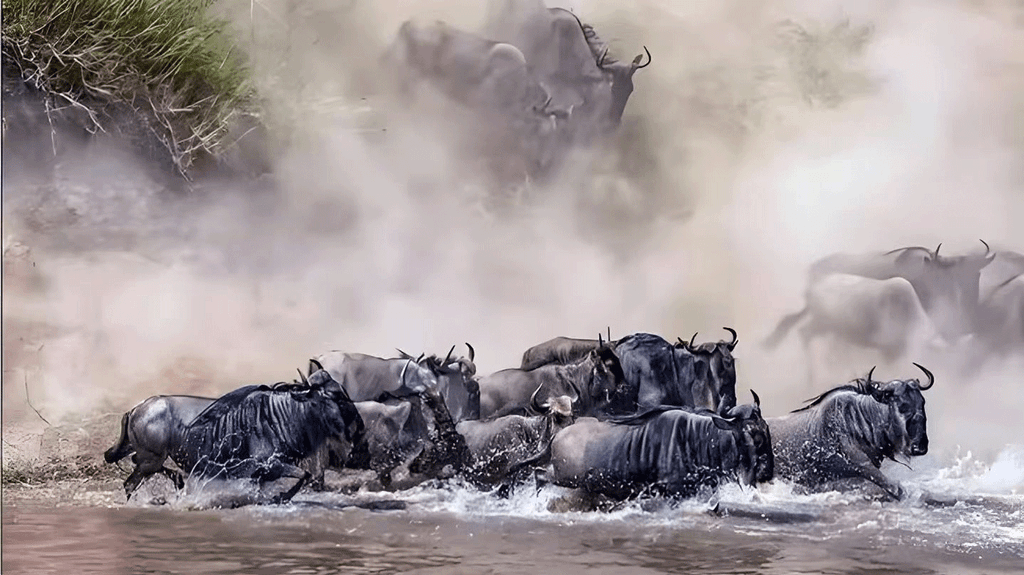
The best time to see the Great Wildebeest Migration in Tanzania depends on the wildlife experience you want. January to March is generally the best period for seeing wildebeest calving in Ndutu and the southern Serengeti. June and July offer opportunities to observe herds moving through the Western Corridor towards the Grumeti River, while July to October is traditionally the main period for following large migration herds in Northern Serengeti and possible Mara River crossings. Visitors can also see wildebeest throughout the year because the migration moves continuously across the Serengeti–Mara ecosystem.
There is no single month that suits every traveller. The right time depends on whether you want to see newborn animals, follow large moving herds, photograph river crossings or combine migration viewing with general wildlife experiences. Understanding these seasonal differences helps you choose the right safari area and plan your journey around the migration.
Best Time to See Wildebeest Calving in Tanzania
January and February are particularly important months for wildebeest calving in Ndutu and the southern Serengeti. During this period, large numbers of female wildebeest give birth across the short-grass plains, where seasonal rainfall supports fresh grazing for mothers and their young calves.
February is generally the peak calving month, although births can begin earlier and continue into March. Newborn wildebeest attract predators, making this period interesting for visitors who want to observe the relationship between grazing animals and predators in their natural environment.
Ndutu is a strong choice for travellers interested in newborn calves, predator behaviour and wildlife photography. The southern plains also offer open landscapes where visitors can observe large herds spread across the grasslands.
Recommended travel period: January to March.
Best safari area: Ndutu and Southern Serengeti.
Main experience: Newborn wildebeest, large grazing herds and predator activity.
Best Time to See Mara River Crossings
July to October is generally the main period for possible Mara River crossings in the northern Serengeti and Kenya’s Maasai Mara. During these months, wildebeest herds move towards northern grazing areas as they follow seasonal changes in rainfall and grass availability.
The Mara River creates a natural barrier along the migration route. Wildebeest may gather along the banks before entering the water, where crocodiles, currents and steep riverbanks make crossing difficult. Some groups cross into Kenya, while others move in the opposite direction as the herds continue searching for grazing.
August and September are traditionally popular months for visitors hoping to see these crossings. However, there is no guaranteed crossing date or fixed location. Herds can wait for several days, change direction or cross at different points along the river.
Travellers whose main interest is seeing possible river crossings should consider staying in Northern Serengeti, particularly around Kogatende and Lamai. Several nights in the region can provide more opportunities to follow herd movements.
Recommended travel period: July to October.
Best safari area: Northern Serengeti, especially Kogatende and Lamai.
Main experience: Large migration herds, possible Mara River crossings and crocodile activity.
Best Time to See Large Wildebeest Herds Moving Across the Serengeti
Visitors do not need to witness calving or river crossings to enjoy the Great Migration. Large wildebeest herds move across different parts of the Serengeti throughout the year, creating opportunities to observe thousands of animals grazing, travelling and gathering across the plains.
May and June are useful months to consider the central and western Serengeti, where herds generally move towards the Western Corridor. July and August offer opportunities in the northern Serengeti, while November and December bring the expected southward movement towards central and southern grazing areas.
The exact location of the herds changes with rainfall and grazing conditions. Travellers should therefore choose their safari region according to recent migration observations rather than relying only on a calendar.
Recommended travel period: May to December, depending on the herd location.
Best safari areas: Central Serengeti, Western Corridor and Northern Serengeti.
Main experience: Moving herds, open grasslands, zebras and general wildlife viewing.
Best Time to Visit the Serengeti for General Wildlife Viewing
The Serengeti offers wildlife viewing throughout the year, even when the Great Migration herds are concentrated in another region. Resident animals such as lions, leopards, elephants, giraffes, buffaloes and many other species live across the park.
Central Serengeti is particularly valuable for visitors who want to combine migration viewing with general game drives. Its resident wildlife provides excellent safari opportunities outside the periods when the largest wildebeest concentrations pass through the region.
The dry season, particularly from June to October, is popular for wildlife viewing because vegetation becomes less dense and animals often gather around remaining water sources. The green season also has its attractions, including fresh landscapes, seasonal birdlife and the calving period in the south.
Recommended travel period: Throughout the year.
Best safari area: Central Serengeti and other regions selected according to the season.
Main experience: Resident wildlife, predators, elephants, giraffes and seasonal migration activity.
Which Month Should You Choose for Your Great Migration Safari?
Your travel dates should match the migration experience you most want to see. The following guide provides a practical starting point for choosing your safari period.
| Your main interest | Recommended months | Area to consider |
| Wildebeest calving | January to March | Ndutu and Southern Serengeti |
| Newborn calves and predators | February to March | Ndutu |
| Herds moving towards the west | May to June | Central and Western Serengeti |
| Grumeti River activity | June to July | Western Corridor |
| Possible Mara River crossings | July to October | Northern Serengeti |
| Large northern migration herds | August to September | Kogatende and Lamai |
| Herds returning south | November to December | Central and Southern Serengeti |
| General wildlife viewing | Year-round | Central Serengeti and other parks |
These periods represent typical seasonal patterns, not guaranteed sightings. Rainfall can bring forward or delay herd movements, so travellers should check the latest available information before confirming their safari itinerary.
Is the Great Migration Worth Seeing Outside the Peak Season?
Yes. The Great Migration is not a single event that happens on a particular day or in one location. It is a continuous movement involving millions of grazing animals across the Serengeti-Mara ecosystem.
Travelling outside the most popular calving and river-crossing periods can still provide excellent wildlife experiences. Visitors may encounter large herds, predators, zebras, and other wildlife in different parts of the Serengeti. The green season can also offer beautiful landscapes and fewer visitors in some areas.
Rather than choosing a month only because it is described as peak migration season, consider the location you want to visit, the wildlife experience you prefer, and the amount of time available for your safari.
Mara River Crossings: When and Where Can You See Them?
Mara River crossings are most likely to occur between July and October, when wildebeest herds move into the Northern Serengeti and Kenya’s Maasai Mara. In Tanzania, the main areas to consider are Kogatende, Lamai Wedge and the wider Mara River region. August and September are traditionally popular months for crossing safaris, but the herds do not follow a fixed timetable. They may reach the river, gather along the banks and cross suddenly, or wait before moving to another location.
The Mara River forms part of the natural route between Tanzania and Kenya. Wildebeest move across the wider Serengeti–Mara ecosystem in search of fresh grass and water, so some herds cross from the Northern Serengeti into the Maasai Mara, while others return towards Tanzania. Zebras often travel alongside the wildebeest, making the northern migration an important wildlife experience for safari visitors.
When Does the Northern Migration Reach the Mara River?
The northern migration usually develops from June and July as herds move through the western and northern parts of the Serengeti. By July, some groups may reach the Mara River, although their arrival depends on rainfall, grazing conditions and the movement of other herds.
August and September are traditionally strong months for planning a Mara River crossing safari. Large groups may gather in the Northern Serengeti or move between Tanzania and Kenya. October can also offer crossing opportunities as herds continue using the northern grazing areas or begin their gradual movement south.
These months are seasonal guides rather than confirmed crossing dates. The migration does not arrive as one single group, and different herds can occupy different areas at the same time.
Where Can You See Mara River Crossings in Tanzania?
Kogatende is one of the main safari areas for visitors hoping to see wildebeest near the Mara River. Located in the Northern Serengeti, it provides access to sections of the river where migrating herds may gather and attempt to cross. Several seasonal camps and lodges operate in this region during the migration period.
Lamai Wedge is another important area to consider. Its position near the Mara River makes it useful for following herd movements in the northern Serengeti. Depending on where the animals are moving, guides may explore different river sections around Lamai rather than remain at one viewing point.
The wider Bologonja area can also be relevant when planning a northern Serengeti safari. However, the most productive viewing location changes with the herds. Staying in the Northern Serengeti gives visitors access to several wildlife areas, but it does not guarantee that animals will cross near their camp.
What Happens During a Mara River Crossing?
A crossing often begins when a herd approaches the riverbank while searching for grazing on the other side. The wildebeest may gather in large numbers, move along the bank and approach the water several times before any animal enters.
The animals face several natural challenges. Strong currents, steep riverbanks, deep water and Nile crocodiles make the crossing dangerous. Once some wildebeest enter the river, others may follow, creating a fast-moving group as animals try to reach the opposite bank.
Not every attempt leads to a crossing. A herd may hesitate, turn away from the water or move along the river before trying another section. Some groups cross quickly, while others wait for hours or longer. These changing decisions are part of the natural behaviour of the migration.
Why Can’t You Predict an Exact Crossing Date?
Wildebeest river crossings depend on natural conditions rather than a fixed calendar. Rainfall influences where fresh grass grows, while water levels, river currents and the condition of the riverbanks affect where animals may attempt to cross.
Herd behaviour also changes from one day to another. A large group may gather beside the river without entering the water. Another group may cross when visitors are not nearby. Even when guides know the areas where herds are moving, they cannot control when or where the animals will cross.
For this reason, no tour operator can honestly guarantee a Mara River crossing on a specific date. A migration forecast can help visitors choose a suitable travel period and safari region, but it cannot promise a particular wildlife event.
How Can You Improve Your Chances of Seeing a River Crossing?
Choose a safari that spends several nights in the Northern Serengeti rather than visiting the area for only a short game drive. A longer stay gives your guide more opportunities to follow the herds and respond to recent wildlife observations.
Camp location also matters. Staying around Kogatende or Lamai can reduce the distance to parts of the Mara River, depending on where the herds are moving. Before booking, ask which area the camp uses as its base and how the safari team receives recent migration updates.
A knowledgeable local guide can help you follow herd movements, identify likely viewing areas and understand animal behaviour. However, patience remains essential. You may spend time watching wildebeest gather at the river without seeing them cross, and that is a normal part of a natural migration safari.
Responsible Viewing at Mara River Crossing Points
River crossings can attract many safari vehicles, so responsible viewing helps protect the animals and the quality of the experience. Drivers should follow Serengeti National Park regulations, use designated viewing areas and avoid blocking the animals’ route to the water.
Vehicles should not crowd the riverbank, chase the herd or pressure wildebeest into entering the river. Such behaviour can create unnecessary stress and increase the danger to animals. Visitors should remain inside their vehicles unless they are at an authorised place where getting out is permitted.
Respectful wildlife viewing gives the herds space to make their own decisions. It also helps protect the river environment for future visitors and the animals that depend on it.
A Mara River crossing is never guaranteed, but choosing the right season, staying in the Northern Serengeti for several nights, and travelling with an experienced guide can increase your chances of witnessing this remarkable part of the Great Migration.
Best Time to Visit the Serengeti for Wildebeest Calving
The best time to visit the Serengeti for wildebeest calving is generally from January to March, when large herds gather across the southern plains of the Serengeti ecosystem, particularly around Ndutu. February is usually the busiest calving period, when many wildebeest give birth within a relatively short time. Visitors can see newborn calves taking their first steps, large herds grazing across open grasslands and predators following the seasonal concentration of young animals.
Calving season offers a different experience from the Mara River crossings. Instead of focusing on herds entering the water, visitors spend time observing newborn wildlife, predator behaviour and the daily movement of animals across the southern plains.
Where Does Wildebeest Calving Take Place?
Wildebeest calving mainly takes place on the short-grass plains of the southern Serengeti ecosystem, including the Ndutu area in the Ngorongoro Conservation Area. These open grasslands provide fresh grazing after seasonal rains, helping pregnant wildebeest find food before and after giving birth.
Ndutu is one of the most popular areas for calving-season safaris because large herds often gather across its plains. Nearby southern Serengeti areas can also offer good viewing opportunities, depending on rainfall and the movement of the animals.
The herds do not remain in one fixed location throughout the season. They move between grazing areas as grass and water conditions change, so choosing accommodation close to the expected herd location can make a difference to daily game drives.
When Are Newborn Wildebeest Calves Born?
Wildebeest calving generally takes place between January and March, with February often considered the peak period. Many females give birth during a concentrated period, creating opportunities to observe newborn calves among the herds.
Young calves can stand and walk shortly after birth. Visitors may see mothers protecting their young, calves staying close to the herd and groups moving across the plains in search of fresh grass.
The exact number of births and their timing vary each year. Rainfall and grazing conditions influence when the herds gather, so February should be treated as a typical peak period rather than a guaranteed date for the highest concentration of newborn calves.
Why Is Predator Activity High During Calving Season?
Calving season attracts predators because newborn wildebeest provide an important food source. Lions, cheetahs, hyenas and other predators follow the herds across the southern plains, creating opportunities to observe hunting behaviour and interactions between predators and their prey.
However, predator sightings and hunting events are never guaranteed. Some game drives may reveal lions resting near the herds, cheetahs scanning the grasslands or hyenas moving through the plains. On other drives, visitors may see mothers and calves grazing peacefully without any predator encounter.
This combination of newborn wildlife and predator activity makes the calving season especially interesting for wildlife photographers and visitors who want to understand how the Serengeti ecosystem works.
What Are the Advantages of a Calving-Season Safari?
A calving-season safari offers more than the chance to see baby wildebeest. Large herds gather across open plains, making it possible to observe their movement, feeding behaviour and interactions with other grazing animals. The southern grasslands also provide wide landscapes that are attractive for photography.
The concentration of wildebeest can make predator activity easier to observe, although individual sightings depend on natural behaviour and daily conditions. Visitors can also enjoy zebras, gazelles, lions, cheetahs, hyenas and many other animals that share the ecosystem.
Another advantage is the opportunity to explore Ndutu and the southern Serengeti during the green season, when rainfall can transform the plains into fresh, colourful landscapes. Travellers should expect occasional rain and changing road conditions, so a suitable vehicle and an experienced safari guide are important.
How Many Days Should You Spend During Calving Season?
A safari of three to four days in Ndutu and the southern Serengeti gives visitors a useful amount of time to explore different parts of the calving area. Travellers with five to seven days can combine the southern plains with Central Serengeti, adding more wildlife habitats and a wider safari experience.
The right duration depends on your arrival point, budget and other parks you want to visit. Spending several nights near the herds is often more useful than travelling long distances every day in search of them.
Recommended travel period: January to March, with February usually the peak calving month.
Best safari areas: Ndutu and the southern Serengeti ecosystem.
Main experience: Newborn wildebeest calves, large grazing herds, predator activity and green-season landscapes.
Serengeti vs Maasai Mara: Which Is Better for the Great Migration?
The Serengeti in Tanzania and the Maasai Mara in Kenya are both important parts of the Great Wildebeest Migration ecosystem. Neither destination is better throughout the year. The Serengeti is the stronger choice for visitors who want to follow different stages of the migration, including the calving season and the movement through the Western and Northern Serengeti. The Maasai Mara is an excellent choice for visitors travelling during the northern migration season, especially those hoping to see large herds and possible Mara River crossings.
Your best choice depends on your travel dates, the wildlife experiences you prefer, your safari duration and where you plan to start your journey.
Serengeti vs Maasai Mara: Main Differences
| Comparison | Serengeti, Tanzania | Maasai Mara, Kenya |
| Location | Northern Tanzania | Southwestern Kenya |
| Migration season | Different migration stages throughout the year | Mainly the northern migration period, generally July to October |
| Calving season | Excellent opportunities around Ndutu and the southern plains | Not a main calving destination for the Serengeti–Mara migration |
| River crossings | Possible around the Grumeti and Mara rivers | Possible along the Mara River |
| Wildlife viewing | Large landscapes, migration herds and resident wildlife | High concentrations of wildlife across open savannah |
| Safari experience | Suits longer journeys across different regions | Suits shorter, focused wildlife safaris |
| Accessibility | Access by road and scheduled or charter flights from other parts of Tanzania | Access by road or flights from Nairobi and other safari destinations |
| Accommodation | Tented camps, mobile camps, lodges and public campsites | Tented camps, lodges and private conservancy camps |
1. Best Time to Visit: Serengeti or Maasai Mara
The time of year is one of the most important factors when choosing between these destinations.
The Serengeti offers migration experiences during different parts of the year. From January to March, visitors can explore Ndutu and the southern plains during the calving season. Between May and July, herds generally move through the central and western regions towards the northern Serengeti. From July to October, the northern areas offer opportunities to follow the migration and look for possible Mara River crossings.
The Maasai Mara is particularly popular from around July to October, when migration herds move into Kenya and use its grasslands during the northern part of their journey. This is a good period for visitors interested in large herds and possible river crossings.
However, these are seasonal patterns rather than fixed dates. Rainfall, grazing conditions and herd movements influence where the animals gather each year.
Choose the Serengeti if you plan to travel between January and June, or want to explore different stages of the migration.
Choose the Maasai Mara if you plan to visit Kenya during the northern migration season, particularly from July to October.
2. Wildlife Viewing: Which Destination Offers More?
Both destinations offer excellent opportunities to see wildlife. The Serengeti is known for its extensive grasslands, large wildebeest and zebra herds, and resident predators such as lions, leopards and cheetahs. Its different regions also provide varied habitats and wildlife experiences throughout the year.
The Maasai Mara is famous for its open savannah landscapes and strong wildlife viewing opportunities. Visitors can encounter lions, elephants, buffaloes, giraffes, cheetahs, hyenas and many other animals. During the migration season, large herds of wildebeest and zebras add another important attraction.
The main difference is not simply the number of animals. It is the timing and location of the wildlife experience. The Serengeti gives visitors access to more stages of the annual migration, while the Maasai Mara offers a concentrated experience during the northern migration period.
3. Safari Experience: Large Wilderness or a More Focused Safari?
The Serengeti is a vast protected landscape with different regions to explore. Visitors can travel between the southern plains, Central Serengeti, Western Corridor and Northern Serengeti according to the season. This makes it suitable for longer safaris that follow the expected migration route.
The Maasai Mara offers a more compact safari experience within the main reserve and surrounding conservancies. Visitors can explore open grasslands, river areas and wildlife-rich plains without travelling across a landscape as extensive as the Serengeti.
Some private conservancies around the Maasai Mara also offer additional activities and safari arrangements that differ from those permitted inside the national reserve. Visitors should check which activities their chosen accommodation includes.
If you want a longer journey through different landscapes and migration areas, the Serengeti is a strong choice. If you prefer a shorter safari focused on the Mara ecosystem, Kenya is worth considering.
4. Accessibility: How Do You Get There?
The Serengeti is commonly reached through Arusha, with road transfers and flights to airstrips within the park. A road safari allows visitors to explore other northern Tanzania destinations, such as Tarangire National Park and the Ngorongoro Conservation Area, before or after visiting the Serengeti.
The Maasai Mara is commonly accessed from Nairobi by road or domestic flight. Flying can reduce travel time and make it easier to include the reserve in a shorter Kenya itinerary.
For visitors arriving internationally, the best route depends on their arrival airport, available flights, safari duration and other destinations they want to visit. Travellers combining Tanzania with Zanzibar may find a Tanzania itinerary more convenient, while those starting in Nairobi may find the Maasai Mara easier to include.
5. Accommodation: Where Can You Stay?
Both destinations offer accommodation for different budgets and travel styles, from comfortable lodges to luxury tented camps.
In the Serengeti, visitors can choose accommodation in Ndutu, Central Serengeti, the Western Corridor or Northern Serengeti. Some camps operate seasonally or move between locations to follow the migration. This gives travellers options for choosing a camp close to the expected herd location.
In the Maasai Mara, accommodation includes lodges and tented camps inside the reserve and in surrounding private conservancies. Some conservancy properties offer a more exclusive safari setting, depending on their location and operating arrangements.
In either destination, the location of your accommodation matters. Staying close to the expected migration area can reduce unnecessary driving and give you more time for game viewing. A beautiful lodge far from the herds may not be the best choice if migration viewing is your main priority.
6. Can You Visit Both the Serengeti and Maasai Mara?
Yes. Visiting both destinations gives you a wider understanding of the Great Migration because the herds move across the Tanzania Kenya border as part of one connected ecosystem.
A combined safari can include Northern Serengeti and the Maasai Mara during the northern migration season. This allows visitors to explore different areas along the migration route, although it does not guarantee a river crossing.
Travellers should plan border transfers, flights, park entry arrangements and accommodation carefully. The best itinerary depends on the number of days available and the direction of travel.
So, Which Is Better for the Great Migration?
The Serengeti is the better choice for visitors who want to experience more stages of the Great Migration throughout the year, especially the January-to-March calving season and the movement through Tanzania’s different migration regions.
The Maasai Mara is an excellent choice for visitors focusing on the northern migration season, open savannah wildlife viewing, and possible Mara River crossings in Kenya.
If you have enough time and budget, combining both destinations can create a more complete safari experience. If you need to choose only one, start with your travel month and the wildlife experience you most want to see rather than choosing based on destination popularity.
Best Tanzania Safari Itineraries for the Wildebeest Migration
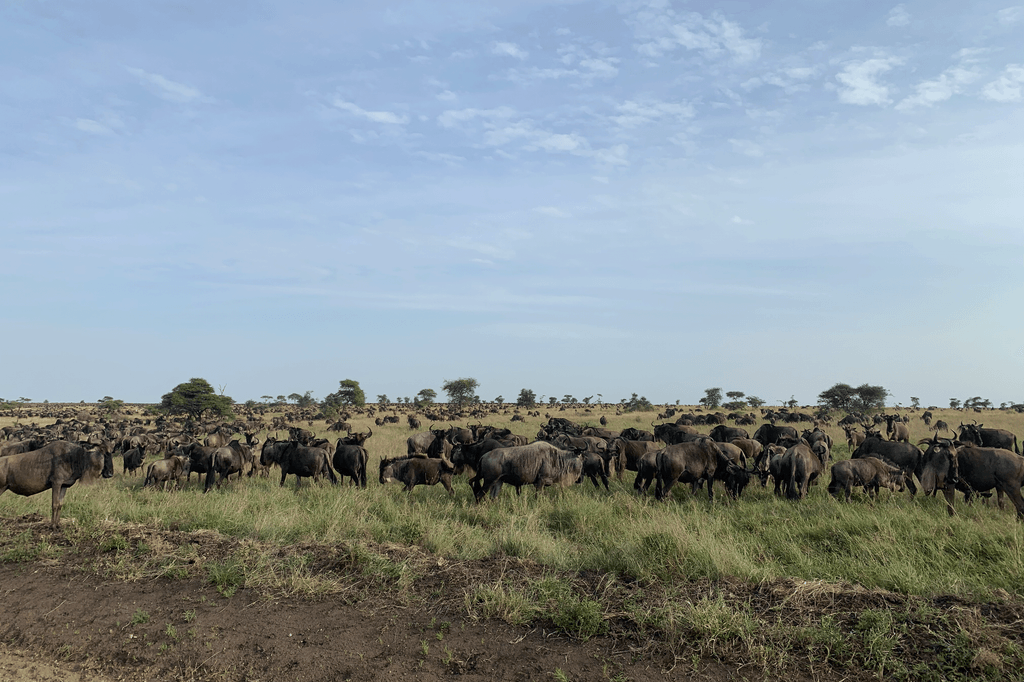
The best Tanzania safari itinerary for the Great Wildebeest Migration depends on when you travel, where the herds are expected to gather and how many days you have available. A January or February safari should focus on Ndutu and the southern Serengeti for calving, while a July to September trip should spend more time in Northern Serengeti for possible Mara River crossings. Visitors can also combine the Serengeti with Tarangire National Park and the Ngorongoro Crater for a wider Tanzania wildlife experience.
Rather than visiting too many parks in a short time, choose an itinerary that gives you enough time in the region where the migration is expected. This approach reduces unnecessary driving and allows more time for game drives.
How Many Days Do You Need for a Wildebeest Migration Safari?
The right safari duration depends on your interests, travel arrangements and preferred accommodation. A short fly-in safari can reach a seasonal migration area quickly, while a road safari from Arusha usually needs more days because of the distances involved.
A five-day safari can provide a good introduction to the migration when you focus on one main region. Six to seven days allow more time for game drives and an additional destination. Eight to ten days are suitable for visitors who want to explore multiple Serengeti regions or combine the migration with other northern Tanzania parks.
| Safari duration | Suggested experience | Best suited to |
| 4 to 5 days | Focused safari in one migration region | Travellers with limited time, especially fly-in safaris |
| 5 to 6 days | Migration area with an additional wildlife destination | Calving season and shorter northern circuit trips |
| 6 to 7 days | Serengeti with Ngorongoro or Tarangire | First-time visitors |
| 8 to 10 days | More time in the Serengeti and multiple wildlife areas | Migration enthusiasts and photographers |
| 10 to 14 days | Extended northern circuit and optional Zanzibar extension | Travellers wanting a longer Tanzania holiday |
These are planning guidelines rather than fixed requirements. The number of nights spent in the correct migration area is often more important than the total number of parks included.
1. Five-Day Wildebeest Calving Safari: Ndutu and Southern Serengeti
Best travel period: January to March.
Ideal for travellers interested in newborn wildebeest calves, large grazing herds and predator activity, this safari focuses on Ndutu and the southern Serengeti plains. During the calving season, thousands of wildebeest gather in this region to give birth.
Starting and ending in Arusha, the five-day journey allows plenty of time to explore the southern plains without spending too many days travelling between parks.
Suggested itinerary:
Day 1: Travel from Arusha to Ndutu through the Ngorongoro Conservation Area, enjoying wildlife viewing along the way.
Day 2: Explore Ndutu and the surrounding southern plains on full-day game drives.
Day 3: Visit different calving areas while searching for wildebeest herds, newborn calves and predators.
Day 4: Continue exploring Ndutu or nearby southern Serengeti areas, depending on recent herd movements.
Day 5: Return to Arusha or connect with a scheduled flight.
For travellers whose main interest is the calving season, this route offers more time in the migration region than a safari covering several national parks. Adding Central Serengeti or Ngorongoro Crater is possible with extra days.
2. Six-Day Central and Western Serengeti Safari: Following the Herds West
Best travel period: May to July, depending on rainfall and herd movements.
During this period, migrating herds generally move towards the Western Corridor. The Grumeti River becomes an important wildlife area, where wildebeest may gather near the water and attempt seasonal crossings.
A six-day journey provides time to explore Central Serengeti before continuing west towards the Grumeti region.
Suggested itinerary:
Day 1: Travel from Arusha to Central Serengeti by road, with wildlife viewing along the way.
Day 2: Spend a full day exploring Seronera and its surrounding plains.
Day 3: Continue towards the Western Corridor while enjoying game drives across the Serengeti.
Day 4: Explore the Grumeti area and its surrounding wildlife habitats.
Day 5: Follow the herds through the Western Corridor, using recent wildlife observations to guide your game drives.
Day 6: Return by road or take a flight from a suitable Serengeti airstrip.
This safari suits travellers who want to explore a different part of the Serengeti during the western migration period. Grumeti River crossings are possible, but their timing and location cannot be guaranteed.
3. Seven-Day Northern Serengeti Safari: Following the Migration Towards the Mara River
Best travel period: July to October.
Northern Serengeti is a major destination during the northern migration season. Areas such as Kogatende and Lamai offer opportunities to follow migrating herds and look for possible Mara River crossings.
Since this region lies far from Arusha and Central Serengeti, allowing several nights in the north gives travellers more time to explore the migration areas.
Suggested itinerary:
Day 1: Travel from Arusha to Central Serengeti by road or scheduled flight.
Day 2: Explore Central Serengeti before continuing towards the northern region.
Day 3: Discover Kogatende and nearby migration areas on game drives.
Day 4: Spend a full day exploring the Mara River and surrounding plains.
Day 5: Follow the migrating herds through Northern Serengeti, depending on their location.
Day 6: Enjoy another full-day game drive in the northern region.
Day 7: Fly back to Arusha or return by road, depending on your arrangements.
For travellers hoping to witness river crossings, spending several nights in Northern Serengeti offers more opportunities than moving between regions every day. However, herd movements are unpredictable, and crossings may happen at different river sections.
4. Seven-Day Classic Tanzania Safari: Tarangire, Serengeti and Ngorongoro
Best travel period: Throughout the year, with the Serengeti region selected according to the migration season.
Some travellers prefer a wider wildlife experience rather than spending the entire safari following the Great Migration. A classic Northern Tanzania safari combines elephants, big cats, dramatic landscapes and the wildlife-rich Ngorongoro Crater.
The seven-day route includes Tarangire, Serengeti and Ngorongoro, with the Serengeti section planned around the expected migration location.
Suggested itinerary:
Day 1: Arrive in Arusha and prepare for your safari.
Day 2: Explore Tarangire National Park, famous for elephants, baobab trees and diverse wildlife.
Day 3: Travel towards Serengeti through the Ngorongoro Conservation Area.
Day 4: Spend a full day exploring the Serengeti migration region.
Day 5: Continue game drives in Serengeti, following the expected location of the migrating herds.
Day 6: Visit Ngorongoro Crater for a wildlife game drive.
Day 7: Return to Arusha.
First-time visitors often choose this route because it combines several famous wildlife destinations in one trip. If migration viewing is the main priority, adding another day or two in Serengeti can provide more time to explore the relevant region, particularly in Northern Serengeti.
5. Ten-Day Tanzania Migration Safari: More Time in the Serengeti
Best travel period: Depends on the migration stage you want to experience.
A ten-day safari provides greater flexibility to explore different Serengeti regions without rushing between destinations. Wildlife photographers, families and travellers with more time can enjoy longer game drives and additional nights in key migration areas.
Seasonal planning determines the best route. During the calving season, the itinerary can focus on Ndutu and the southern plains before continuing to Central Serengeti. For the northern migration season, travellers can explore Central and Northern Serengeti, including Kogatende and Lamai.
Suggested itinerary for the northern migration season:
Day 1: Arrive in Arusha.
Day 2: Explore Tarangire National Park.
Day 3: Travel to Central Serengeti.
Day 4: Enjoy game drives around Central Serengeti.
Day 5: Continue towards Northern Serengeti, with wildlife viewing along the way.
Days 6 to 8: Spend three full days exploring Kogatende, Lamai and the Mara River area.
Day 9: Return towards Central Serengeti or connect with a suitable flight.
Day 10: Travel to Arusha or take your onward flight.
With three nights dedicated to Northern Serengeti, this itinerary gives travellers more opportunities to follow the herds and explore the Mara River region. Alternatively, those who prioritise migration viewing can replace Tarangire with additional nights in Serengeti.
Which National Parks Should You Combine with the Serengeti?
The best park combinations depend on your available days and the wildlife experiences you want.
Tarangire National Park: A good addition for visitors interested in elephants, baobab landscapes and diverse wildlife. It fits naturally into a Northern Circuit safari starting from Arusha.
Ngorongoro Conservation Area: A valuable addition for visitors who want to explore the Ngorongoro Crater and its wildlife. The conservation area also includes the Ndutu region, which is important during the calving season.
Lake Manyara National Park: An option for visitors with additional time who want to explore a different landscape, woodland habitats and birdlife. It can be included in some Northern Circuit itineraries, depending on the route.
Central Serengeti: A useful addition to migration-focused safaris because it offers resident wildlife and a convenient base for exploring the central plains.
You do not need to visit every park on one trip. Choosing fewer destinations and spending more time in the right migration region can create a more rewarding safari.
Should You Choose a Road Safari or a Fly-In Safari?
A road safari allows you to explore Tanzania at a relaxed pace, enjoy the scenery and visit several destinations along the Northern Circuit. It is suitable for visitors who have enough days and want to combine the Serengeti with Tarangire and Ngorongoro.
A fly-in safari is useful when you have limited time or want to reach a remote migration region without spending many hours travelling by road. Flights can connect Arusha with suitable Serengeti airstrips, including those serving the central and northern areas. The correct airstrip depends on your camp location and travel dates.
Both options offer good safari experiences. Your choice should depend on your budget, available time, accommodation location and preferred travel style.
How to Choose the Right Migration Safari Itinerary
Start with your travel dates and identify the Serengeti region where the herds are generally expected to be during that period. Next, decide whether your main interest is calving, moving herds, possible river crossings or general wildlife viewing.
Then choose a safari duration that gives you enough time in that region. Consider adding Tarangire or Ngorongoro if you want a wider wildlife experience, but avoid including too many destinations if they leave little time for game drives.
Most importantly, check recent migration observations before finalising the accommodation and route. Seasonal forecasts help with planning, but the wildebeest follow rainfall and fresh grazing rather than a fixed itinerary.
A well-planned 2027 migration safari should match the expected herd location, allow enough time for wildlife viewing and leave room to adjust when natural conditions change.
Where to Stay During the 2027 Wildebeest Migration
Choosing where to stay during the 2027 Wildebeest Migration is an important part of planning your Tanzania safari. The best accommodation depends on where the herds are expected to move during your travel dates. Ndutu and the southern plains are popular during the calving season, Central Serengeti offers year-round wildlife viewing, the Western Corridor is important during the movement towards the Grumeti River, and Northern Serengeti is a popular base for possible Mara River crossings.
Tanzania offers different accommodation options, including permanent lodges, luxury tented camps, mobile camps and public campsites. Some properties operate throughout the year, while others open for specific migration seasons. Choosing the right location can reduce driving time and give you more opportunities to explore the wildlife areas.
Where to Stay in Ndutu During the Calving Season
Best travel period: December to March, particularly January and February.
Ndutu is one of the best areas to stay during the wildebeest calving season. Located in the Ngorongoro Conservation Area, near the southern Serengeti plains, it attracts large herds when seasonal rainfall supports fresh grazing.
Accommodation in this area mainly includes seasonal tented camps, mobile camps and established safari lodges. Many seasonal camps operate during the calving months to place guests close to the expected herd locations.
Examples of accommodation in and around the Ndutu area include Ndutu Safari Lodge, Lake Masek Tented Camp and seasonal options such as Lemala Ndutu Tented Camp. Availability and operating dates can change, so travellers should confirm the property’s location and opening period for their dates.
Staying around Ndutu gives visitors opportunities to explore the southern plains, observe newborn wildebeest calves and look for predators that follow the herds. If calving is your main reason for travelling, consider spending at least two or three nights in this region rather than treating it as a short stop between parks.
Where to Stay in Central Serengeti
Best travel period: Throughout the year.
Central Serengeti, particularly the Seronera area, is one of the most convenient bases for a safari because it offers wildlife viewing in different seasons. The region supports resident populations of lions, leopards, cheetahs, elephants, giraffes and many other animals, even when the main migration herds move elsewhere.
Accommodation ranges from large safari lodges and permanent tented camps to smaller camps and public campsites. Examples include Serengeti Serena Safari Lodge, Four Seasons Safari Lodge Serengeti and several tented camps around Seronera.
Central Serengeti is a useful choice for first-time visitors, travellers combining several national parks and guests whose dates do not match the main calving or river-crossing periods.
It can also serve as a stop between the southern, western and northern migration regions. However, if your main goal is to see calving or possible river crossings, staying in Central Serengeti for the entire safari may mean spending more time driving to reach those areas.
Where to Stay in Western Serengeti
Best travel period: Around May to July, depending on herd movements.
The Western Corridor is an important migration area as wildebeest herds generally move towards the Grumeti River. Visitors staying in this region may encounter large herds, crocodiles around the river, hippos and other wildlife.
Accommodation includes permanent lodges, luxury tented camps and properties in private wildlife areas around the western side of the Serengeti ecosystem. Examples include Kirawira Serena Camp and accommodation within the Singita Grumeti reserves.
The Western Corridor is worth considering if you want to explore a less central part of the Serengeti and follow the expected westward movement of the herds. Some visitors also choose this area for the chance to observe possible Grumeti River crossings.
However, crossings are not guaranteed, and the herds may move through the region at different times each year. Before booking, check whether your accommodation is actually close to the area where you plan to spend your game drives.
Where to Stay in Northern Serengeti
Best travel period: July to October, depending on migration movements.
Northern Serengeti is a popular accommodation choice during the northern migration season, particularly for visitors hoping to see possible Mara River crossings. The Kogatende and Lamai areas provide access to different sections of the northern plains and the Mara River.
Accommodation includes seasonal mobile camps, permanent tented camps and luxury lodges. Examples include Sayari Camp, Lamai Serengeti and Lemala Kuria Hills. Some camps operate seasonally or adjust their locations according to the migration calendar, so check their exact operating dates.
Staying in Northern Serengeti for several nights gives your guide more time to follow herd movements and explore different river areas. This is important because wildebeest do not cross at one fixed point or according to a predictable schedule.
The northern region is relatively remote, so visitors should also consider transport when choosing accommodation. Flying to a nearby Serengeti airstrip can reduce long road transfers, while a road safari allows you to explore other parts of the park along the way.
Permanent Lodges, Tented Camps or Mobile Camps: Which Should You Choose?
The Serengeti offers several accommodation styles, and each suits a different travel preference.
Permanent lodges provide established facilities, comfortable rooms, restaurants and other services. They are suitable for visitors who prefer a more traditional hotel-style stay. Their location remains fixed, however, so the distance to the migration herds changes as the animals move.
Permanent tented camps offer a closer connection to the natural surroundings while providing private bathrooms, proper beds and safari hospitality. They suit visitors who want a tented safari experience without giving up comfort.
Mobile migration camps move between seasonal locations to stay closer to the expected migration route. They can be particularly useful for visitors planning around calving or the northern migration. However, not every mobile camp follows the herds in exactly the same way, so ask where it will be located during your travel dates.
Public campsites offer a more basic and budget-conscious camping experience. They are suitable for travellers who want a simple safari arrangement and do not require the facilities of a private lodge or luxury tented camp.
Why Does Accommodation Location Matter During the Migration?
The Serengeti is a large ecosystem, and travelling between its different regions can take several hours. Choosing accommodation far from the expected herd location may result in long transfers and less time for wildlife viewing.
For example, a visitor travelling in February who wants to see newborn wildebeest calves should consider accommodation around Ndutu and the southern plains. A traveller visiting in August who hopes to see possible Mara River crossings should look at camps around Kogatende and Lamai instead.
Location also affects the type of safari you experience. A central lodge may offer excellent resident wildlife viewing, while a seasonal camp in a migration area may provide better access to the herds during a particular period.
Before confirming your accommodation, check its exact location, seasonal opening dates, distance from the relevant game-viewing areas and whether it includes transfers or game drives.
When Should You Book Accommodation for the 2027 Migration?
For popular migration periods, particularly February in Ndutu and July to September in Northern Serengeti, it is sensible to arrange accommodation well in advance. Seasonal camps have limited capacity, and the most conveniently located properties can become fully booked during busy travel periods.
Once you know your travel dates, identify the expected migration region and compare accommodation options in that area. Check whether the property operates during your dates and confirm its location before making a payment.
For travellers with flexible dates, a safari operator can help compare different camps and adjust the itinerary according to the latest migration information.
The most important rule is simple: choose the migration region first, then select your camp or lodge according to your budget, comfort preference and travel arrangements.
How to Plan and Book a 2027 Wildebeest Migration Safari
Planning a 2027 Wildebeest Migration Safari in Tanzania starts with choosing the right travel month, identifying where the herds are expected to be and selecting accommodation close to the migration area. Visitors should also decide whether they prefer a private or group safari, compare costs, arrange transport and allow enough time for game drives. Since the migration follows rainfall and fresh grazing, a flexible itinerary is important for making the most of the experience.
Whether you are planning a calving-season safari in Ndutu or travelling to Northern Serengeti for possible Mara River crossings, booking the right combination of camps, transport and park visits can make a significant difference to your trip.
When Should You Book a 2027 Wildebeest Migration Safari?
It is best to start planning as early as possible, particularly if you want to travel during popular migration periods. February is a busy month for visitors interested in wildebeest calving, while July to September attracts travellers hoping to follow large herds in Northern Serengeti and see possible Mara River crossings.
Popular camps and lodges have limited accommodation, and some seasonal tented camps operate for only part of the year. Booking six to twelve months ahead is a useful planning target for high-demand periods, although availability depends on the property and travel dates. If you are planning a trip closer to your travel date, you should still check available accommodation and flights rather than assume everything is fully booked.
Before making a reservation, confirm your travel dates, number of travellers, preferred accommodation standard and expected migration region. These details help your safari operator prepare a suitable itinerary and check availability.
Should You Choose a Private or Group Joining Safari?
The choice between a private and group joining safari depends on your budget, travel style and preferred level of flexibility.
Private safari
A private safari gives you a dedicated vehicle and guide for your travelling party. You can discuss the daily game-drive schedule with your guide, spend more time at wildlife sightings and adjust the route according to recent herd movements.
This option suits couples, families, friends and wildlife photographers who want more control over their safari. It usually costs more per person when only a few people share the vehicle, but the cost can become more affordable when several travellers book together.
Group joining safari
A group joining safari allows individual travellers or small parties to share a vehicle, guide and some safari expenses with other visitors. It can be a more affordable way to experience Tanzania’s national parks without paying for a private vehicle.
Group safaris usually follow a fixed itinerary, departure date and accommodation arrangement. Travellers should confirm the group size, departure guarantee, accommodation type, luggage allowance and whether the safari includes all the parks they want to visit.
For migration-focused trips, check that the group itinerary spends enough nights in the correct Serengeti region. A low-cost group safari may not offer the best value if it spends too little time near the expected herds.
How Much Does a Wildebeest Migration Safari Cost in Tanzania?
The cost of a 2027 wildebeest migration safari depends on the number of days, accommodation standard, group size, transport arrangements and parks included. A budget camping safari generally costs less than a mid-range tented camp or luxury lodge safari.
The migration season can also affect accommodation prices. Camps in popular areas such as Ndutu during calving season and Northern Serengeti during the main river-crossing period may charge higher rates because demand is strong and accommodation is limited.
The main factors that influence your safari price include:
Safari duration: More days usually mean higher total costs because of additional park fees, accommodation, meals, vehicle use and guide services.
Accommodation: Public campsites, budget tented camps, mid-range lodges and luxury mobile camps have different prices and facilities.
Transport: A road safari includes vehicle and fuel costs, while a fly-in safari adds domestic flights and possible airstrip transfers.
Number of travellers: Private safari costs are shared among the people travelling together. A larger group can reduce the vehicle cost per person, depending on the vehicle capacity and arrangement.
Park and conservation fees: National park entry, conservation area fees, crater service charges and other applicable fees contribute to the total quotation.
Travel season: High-demand periods and seasonal accommodation can affect the final price.
When comparing quotations, check what each operator includes. A lower price may exclude important items such as airport transfers, drinks, additional activities or certain park fees.
What Is Included in a Tanzania Migration Safari Package?
Safari packages differ between operators, so always request a clear breakdown before paying a deposit.
A typical guided safari package may include a professional safari guide, a 4×4 safari vehicle with a viewing roof, park and conservation fees, accommodation, meals during the safari, drinking water in the vehicle and scheduled game drives.
Depending on the itinerary, packages may also include airport transfers, domestic flights and crater service fees.
International flights, travel insurance, visas, tips, personal expenses and optional activities may be charged separately. These are not automatically included in every safari quotation.
Ask your operator to provide a written itinerary and list of inclusions and exclusions. This makes it easier to compare offers and understand the total cost before confirming your booking.
Should You Choose a Road Safari or Fly-In Safari?
Transport is another important decision when planning a migration safari. The best option depends on your available time, budget and the region you want to visit.
Road safari
A road safari is suitable for visitors who want to explore Tanzania’s Northern Circuit. Travelling from Arusha allows you to combine Tarangire, Ngorongoro and different Serengeti regions along one journey.
The main advantage is the opportunity to experience the changing landscapes and wildlife areas along the way. However, some journeys are long, particularly when travelling between Central and Northern Serengeti.
Fly-in safari
A fly-in safari allows visitors to reach selected Serengeti airstrips by domestic aircraft. It can save considerable travel time, especially for guests visiting remote areas such as Northern Serengeti.
This option is useful for shorter trips, luxury safaris and travellers who prefer to spend more time on game drives rather than road transfers. However, flights increase the overall safari cost, and visitors may need additional transfers between the airstrip and accommodation.
When choosing a flight, confirm the correct arrival airstrip for your camp, luggage restrictions and transfer arrangements.
How to Choose the Right Accommodation for Your Travel Dates
Your accommodation should match the expected migration location. Visitors travelling during the calving season should consider camps around Ndutu and the southern plains. Those visiting during the northern migration season should look at accommodation around Kogatende and Lamai.
Central Serengeti is a useful option for visitors interested in resident wildlife and a wider Northern Circuit safari. The Western Corridor is worth considering when herds are expected to move towards the Grumeti River.
Before confirming a camp or lodge, check its exact location, operating dates, room availability, meal arrangements and whether game drives are included. Some seasonal mobile camps change location during the year, so ask where the camp will be operating during your stay.
Why Flexible Planning Matters During the Great Migration
The Great Migration does not follow a fixed timetable. Rainfall, grass growth and water availability influence where wildebeest gather and how quickly they move between grazing areas.
A forecast can help you choose the most suitable region, but it cannot confirm the exact location of a herd several months in advance. Even during the traditional Mara River crossing season, wildebeest may gather along the river without crossing for several days. They may also cross at a different location from the one your guide first visits.
For this reason, avoid planning your entire safari around one predicted crossing date. Allow enough nights in your main migration area, and work with an experienced guide who can use recent observations to decide where to explore.
If your travel dates are flexible, consider adjusting the accommodation or route according to available migration information. If your dates are fixed, choose the region that normally offers the best opportunities during your visit and understand that wildlife sightings remain natural and unpredictable.
How to Confirm Your 2027 Safari Booking
Once you have selected your travel dates and preferred itinerary, request a detailed quotation from a registered and experienced Tanzania safari operator. Check the company details, itinerary, accommodation names, transport arrangements, package inclusions and cancellation conditions.
Before paying, make sure you understand the deposit amount, balance payment deadline, accepted payment methods and refund policy. Request written confirmation of your accommodation and flight arrangements where applicable.
It is also important to arrange suitable travel insurance, check passport and visa requirements, and discuss any dietary, mobility or special travel needs before departure.
A well-planned migration safari combines the right season, a suitable route, convenient accommodation and enough time for game viewing. By making these decisions early and keeping your plans flexible, you can prepare for a rewarding 2027 safari in Tanzania without relying on guaranteed wildlife encounters.
Frequently Asked Questions About the Wildebeest Migration
When does the Great Wildebeest Migration take place?
The Great Migration happens throughout the year. Herds move between Tanzania’s Serengeti ecosystem and Kenya’s Maasai Mara, following seasonal rainfall, fresh grass and water.
Where is the migration usually found in January and February?
During January and February, large wildebeest herds usually gather around Ndutu and the southern Serengeti plains for the calving season.
When is the best time to see Mara River crossings?
July to October is generally the main period for possible Mara River crossings in Northern Serengeti and the Maasai Mara. August and September are popular months, but crossings are never guaranteed.
Can I see wildebeest crossing the Mara River on a specific date?
No. Wildebeest crossings depend on herd movements and natural conditions. Animals may gather near the river for hours or days before crossing, change direction or use another crossing point.
When is the best time to see newborn wildebeest calves?
January to March is generally the best period, with February often considered the peak calving month. Ndutu and the southern Serengeti are popular areas for viewing newborn calves and predator activity.
How many days do I need for a migration safari?
Five to seven days can provide a rewarding migration safari. Allow more time if you want to explore several Serengeti regions or combine the migration with Tarangire and Ngorongoro.
Is the Serengeti or Maasai Mara better for the Great Migration?
The Serengeti offers opportunities to experience different migration stages throughout the year, including calving. The Maasai Mara is especially popular during the northern migration season from July to October.
Conclusion: Plan Your 2027 Wildebeest Migration Safari
The 2027 wildebeest migration offers exciting opportunities to experience one of Africa’s greatest wildlife events. From the newborn calves in Ndutu to the possible Mara River crossings in Northern Serengeti, each season brings a different safari experience.
The best time to visit depends on what you want to see. January to March is ideal for the calving season, while July to October offers opportunities to follow the herds in Northern Serengeti and witness possible river crossings. Remember that migration movements depend on rainfall and grazing conditions, so exact locations and dates can change.
Planning ahead helps you choose the right travel dates, accommodation and safari route. Contact our team to plan your 2027 wildebeest migration safari in Tanzania and get advice on the best areas to visit during your travel dates.