
 English
 Deutsch
 Italia
7 Days Ndutu Wildebeest Migration Safari
Features
Overview
This 7-day Ndutu wildebeest migration safari takes you through Tanzania's northern wildlife circuit during the Great Migration calving season. Explore Tarangire National Park, Lake Manyara, the southern Serengeti plains around Ndutu, Central Serengeti and the Ngorongoro Crater. The journey combines large elephant herds, newborn wildebeest calves, big-cat encounters and diverse wildlife landscapes in one safari.
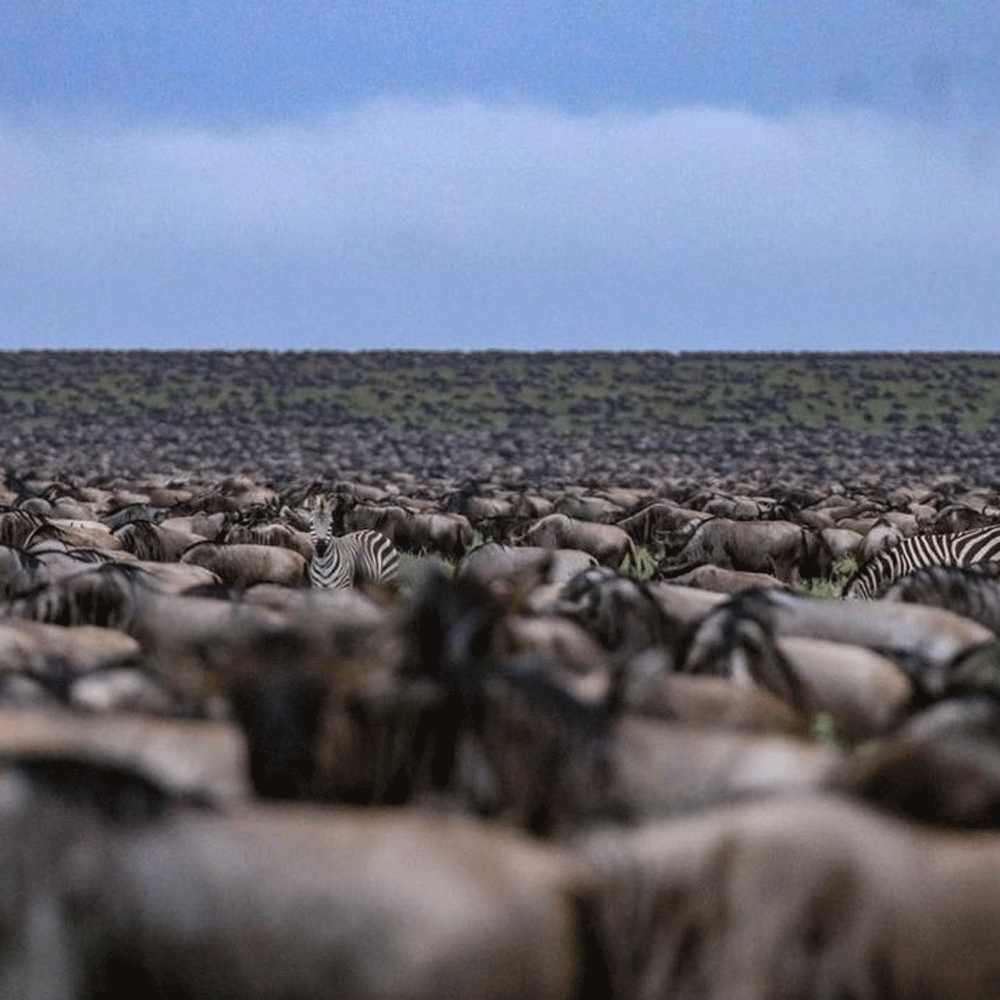
Your adventure begins in Tarangire National Park, famous for its giant baobab trees and large elephant populations, before continuing to Lake Manyara National Park for its groundwater forests, birdlife and varied wildlife habitats. You then travel through the Ngorongoro Conservation Area to Ndutu, where thousands of wildebeest gather during the calving season, particularly between January and March.
Spend time exploring the Ndutu plains, following the migrating herds and looking for newborn calves, lions, cheetahs and hyenas. The additional time in the southern Serengeti allows you to explore different wildlife areas and follow changing herd movements. Continue to Central Serengeti, where the Seronera Valley offers excellent opportunities to search for resident lions, leopards and other wildlife.
Your safari concludes in the Ngorongoro Conservation Area, with a game drive inside the Ngorongoro Crater. Explore its grasslands, swamps and woodland habitats while searching for elephants, buffaloes, lions and the endangered black rhinoceros.
This seven-day itinerary brings together the Ndutu calving season and some of Tanzania's most rewarding wildlife destinations, offering a varied safari experience from the northern circuit to the Ngorongoro Crater.
Typical 7-Day Ndutu Migration Safari Itinerary
Day 1: Arrival at Kilimanjaro International Airport and Transfer to Arusha
Upon arrival, meet your safari representative at the airport and transfer to your accommodation in Arusha. Spend the evening relaxing and preparing for your safari.
Day 2: Arusha to Tarangire National Park to Elephants and Giant Baobabs
Explore Tarangire on a game drive through landscapes dotted with ancient baobab trees. Look out for large elephant herds and other wildlife across the park.
Day 3: Tarangire to Ndutu to Journey to the Great Migration Calving Grounds
Leave Tarangire and travel through the Ngorongoro Conservation Area towards Ndutu. An afternoon game drive offers your first opportunity to explore the southern plains.
Day 4: Full-Day Ndutu Game Drive to Follow the Wildebeest Migration
Across the Ndutu plains, search for migrating herds, newborn wildebeest calves and predators such as lions, cheetahs and hyenas.
Day 5: Ndutu to Central Serengeti to Explore the Seronera Valley
Start with a morning game drive in Ndutu before continuing towards Central Serengeti. The Seronera Valley offers excellent opportunities to spot resident wildlife and big cats.
Day 6: Central Serengeti to Ngorongoro Conservation Area to Journey to the Highlands
Before leaving Central Serengeti, enjoy a morning game drive around the Seronera Valley. Later, travel towards the Ngorongoro Highlands for an overnight stay near the crater.
Day 7: Ngorongoro Crater Game Drive to Return to Arusha
Descend into Ngorongoro Crater for a final wildlife experience, with opportunities to search for the Big Five, including the endangered black rhino. After lunch, return to Arusha or transfer to the airport.
7 Days Ndutu Migration Safari Highlights
- Arrive in Tanzania and enjoy a comfortable overnight stay in Arusha before your safari begins.
- Explore Tarangire National Park, famous for its giant baobab trees and large elephant herds.
- Travel through the Ngorongoro Conservation Area into the southern Serengeti ecosystem.
- Experience the Ndutu wildebeest calving season, when large herds gather across the short-grass plains.
- Observe newborn wildebeest calves and watch mothers caring for their young.
- Search for lions, cheetahs, leopards and hyenas following the migrating herds.
- Enjoy a full-day game drive across Ndutu's seasonal lakes, open plains and woodland habitats.
- Discover Central Serengeti's Seronera Valley, known for its resident big cats and diverse wildlife.
- Explore the Ngorongoro Crater, with opportunities to search for the Big Five, including the endangered black rhinoceros.
- Experience four remarkable stages of Tanzania's northern safari circuit in one seven-day journey.
Best Time for a 7-Day Ndutu Migration Safari
The best time for a 7-day Ndutu migration safari is January to March, when large wildebeest herds gather across the southern Serengeti plains for the calving season. February is usually the peak month, offering excellent opportunities to see newborn calves, large migration herds and predators such as lions, cheetahs and hyenas. December is ideal for seeing herds arriving, while April offers opportunities to see their gradual movement towards other parts of the Serengeti. The timing depends on rainfall, so wildlife locations can change each year.
For the best chance of experiencing peak calving activity, plan your safari for February. January and March are also excellent choices for exploring Ndutu, while the Central Serengeti and Ngorongoro Crater provide rewarding wildlife viewing throughout the safari.
What's Included
- Accommodation
- Airport Transfers
- Drinking Water
- Game Drives
- Meals (Breakfast, Lunch, Dinner)
- Park Entrance Fees
- Private 4×4 Safari Vehicle
- Professional Safari Guide
- Wi-Fi Where Available
Itinerary information
Day 1: Arrival at Kilimanjaro International Airport to Transfer to Arusha
Your 7-day Ndutu migration safari begins when you arrive at Kilimanjaro International Airport (JRO) in Tanzania. Our safari representative will welcome you at the airport and transfer you to Arusha, the starting point for your Northern Tanzania safari.
The drive from Kilimanjaro International Airport to Arusha covers approximately 50 to 55 km and usually takes around one to one and a half hours, depending on traffic. After checking in at Kahawa House, you can relax, enjoy your evening and prepare for the safari ahead.
If you arrive early, you can spend some time enjoying the surroundings of Arusha. Your guide can also brief you about the safari route, the Ndutu calving season and the wildlife experiences planned for the coming days.
Accommodation: Kahawa House, Arusha Meal Plan: Dinner
Day 2: Arusha to Tarangire National Park to Elephants and Giant Baobabs
After breakfast at Kahawa House, leave Arusha and drive to Tarangire National Park, famous for its large elephant herds, ancient baobab trees and diverse wildlife. Upon arrival, begin a game drive through the park, exploring its open grasslands, seasonal swamps and woodland areas.
Follow the Tarangire River, an important water source that attracts wildlife, especially during the dry season. Look out for elephants, giraffes, zebras, wildebeest, buffalo and different antelope species. You may also spot lions, leopards and a variety of birdlife as you explore the park.
Enjoy a picnic lunch during the game drive before continuing your wildlife experience in the afternoon. Later, leave the park and head to your selected accommodation for dinner and an overnight stay.
Accommodation: Tarangire Katikat Tented Camp
Meal Plan: Breakfast, Lunch and Dinner
Day 3: Tarangire to Ndutu to Journey to the Great Migration Calving Grounds
After breakfast, leave Tarangire and travel towards Ndutu, located in the Ngorongoro Conservation Area within the southern Serengeti ecosystem. Enjoy the changing landscapes as you drive through the beautiful northern Tanzania countryside towards the Great Migration calving grounds.
As you approach Ndutu, the landscape opens into seasonal grasslands and acacia woodlands. During the calving season, these plains attract large herds of wildebeest, zebras and gazelles. Depending on the migration's location, you may start spotting wildlife along the way.
Arrive at Ndutu Kati Kati Tented Camp, settle into your tent and enjoy the peaceful wilderness surroundings. If time allows, you can take an afternoon game drive to explore the Ndutu plains before returning to camp for dinner.
Accommodation: Ndutu Kati Kati Tented Camp
Meal Plan: Breakfast, Lunch and Dinner
Day 4: Full-Day Ndutu Game Drive to Follow the Wildebeest Migration
Spend a full day exploring Ndutu, one of the main wildlife areas during Tanzania's Great Migration calving season. After breakfast, head out with your safari guide across the open grasslands, seasonal lakes and acacia woodlands in search of the large wildebeest herds.
January to March offers excellent opportunities to witness the calving season, especially in February when many wildebeest give birth. You may see newborn calves taking their first steps, herds moving across the plains and predators such as lions, cheetahs, hyenas and jackals searching for food.
Enjoy a picnic lunch in the wilderness before continuing your afternoon game drive. Your guide will follow wildlife activity and choose suitable viewing areas based on the herds' location. Later, return to Ndutu Kati Kati Tented Camp for dinner and an overnight stay.
Accommodation: Ndutu Kati Kati Tented Camp
Meal Plan: Breakfast, Lunch and Dinner
Day 5: Ndutu to Central Serengeti to Explore the Seronera Valley
After breakfast, leave Ndutu and travel towards Central Serengeti, enjoying a game drive along the way. As you move north, the landscape changes from the southern open plains to the rocky kopjes, grasslands and acacia woodlands of the central Serengeti.
Continue towards the Seronera Valley, a famous wildlife area known for its resident lions, leopards and other predators. The Seronera River and nearby water sources attract wildlife throughout the year, creating excellent opportunities to spot elephants, giraffes, zebras, wildebeest and various antelope species.
Enjoy a picnic lunch during the journey and continue exploring the park in the afternoon. Later, arrive at your camp or lodge for dinner and an overnight stay in the heart of the Serengeti.
Accommodation: Kubu Kubu Tented Lodge
Meal Plan: Breakfast, Lunch and Dinner
Day 6: Central Serengeti to Ngorongoro Conservation Area to Journey to the Highlands
After breakfast, enjoy a final morning game drive in Central Serengeti, giving you another opportunity to explore the Seronera Valley and spot wildlife. Look out for elephants, giraffes, zebras, wildebeest and resident predators such as lions and leopards.
Later, begin your journey towards the Ngorongoro Conservation Area, travelling through the Serengeti plains and towards the Ngorongoro Highlands. Enjoy a picnic lunch along the way as the scenery changes from open savannah to rolling hills and lush highland landscapes.
Arrive at your lodge in the Ngorongoro Highlands, where you can relax, enjoy dinner and prepare for the following day's Ngorongoro Crater game drive.
Accommodation: Ngorongoro Farm House
Meal Plan: Breakfast, Lunch and Dinner
Day 7: Ngorongoro Crater Game Drive to Return to Arusha
After an early breakfast, travel to Ngorongoro Crater for a memorable game drive inside one of Africa's most remarkable wildlife areas. Descend approximately 600 metres into the crater, where grasslands, forests, swamps and a soda lake support a rich variety of wildlife.
Spend the morning exploring the crater floor in search of elephants, buffaloes, zebras, wildebeest, hippos, lions and the endangered black rhino. The crater also offers excellent opportunities to spot other members of the Big Five, although wildlife sightings can never be guaranteed.
Enjoy a picnic lunch at a designated site before continuing your final game drive. In the afternoon, ascend the crater walls and drive back to Arusha, marking the end of your 7-day Ndutu migration safari.
Accommodation: No overnight stay
Meal Plan: Breakfast and Lunch
Calendar & Prices
Frequently Asked Questions
Where is the best place to go on safari in Tanzania?
Tanzania has several outstanding safari destinations. The Serengeti is famous for exceptional wildlife and the Great Migration, while the Ngorongoro Crater offers one of Africa’s most concentrated wildlife experiences. Tarangire is known for elephants and baobab trees, and Nyerere and Ruaha offer excellent wildlife experiences with fewer visitors.
The best destination depends on your travel dates, interests, budget and the type of safari you want.
How many days do I need for a Tanzania safari?
We generally recommend 4 to 7 days for a first Tanzania safari. A shorter safari can focus on destinations such as Tarangire, Ngorongoro and Serengeti, while longer itineraries allow more time for wildlife viewing and additional destinations.
For travelers combining safari with Zanzibar, a 5- to 10-day Tanzania itinerary can work particularly well.
What is the best time to go on a Tanzania safari?
Tanzania can be visited throughout the year. The best time depends on what you want to experience.
The dry season, generally from June to October, is popular for wildlife viewing because animals are easier to spot around water sources. January and February can also offer excellent safari conditions and are an important period for the wildebeest calving season in the Serengeti.
We recommend choosing your travel dates based on your priorities rather than simply looking for one “best” month.
Is Tanzania good for a first safari?
Yes. Tanzania is an excellent destination for a first African safari because it offers diverse wildlife, iconic national parks, experienced safari guides and a wide range of accommodation options.
A first-time itinerary commonly includes Tarangire, Ngorongoro and Serengeti.
How much does a Tanzania safari cost?
The cost of a Tanzania safari depends on the number of days, destinations, accommodation level, number of travelers, season, activities and whether the safari is private or shared.
Instead of using one price for every traveler, we recommend requesting a personalized quotation based on your dates and requirements.
Will I have a private safari guide?
For private safari itineraries, you will generally travel with your own professional safari guide and private vehicle.
Your guide will help you understand the wildlife, landscapes and local environment while adapting game drives to your interests.
What animals can I see in Tanzania?
Tanzania is home to a remarkable variety of wildlife, including lions, elephants, leopards, cheetahs, giraffes, zebras, wildebeest, buffalo and many other species.
The animals you see will depend on the destination, season, weather and natural conditions.
What is the Great Migration?
The Great Migration is the annual movement of millions of wildebeest and other grazing animals through the Serengeti ecosystem and Kenya’s Maasai Mara.
The timing and location of the herds change throughout the year, so your safari route should be planned around the period you intend to travel.
